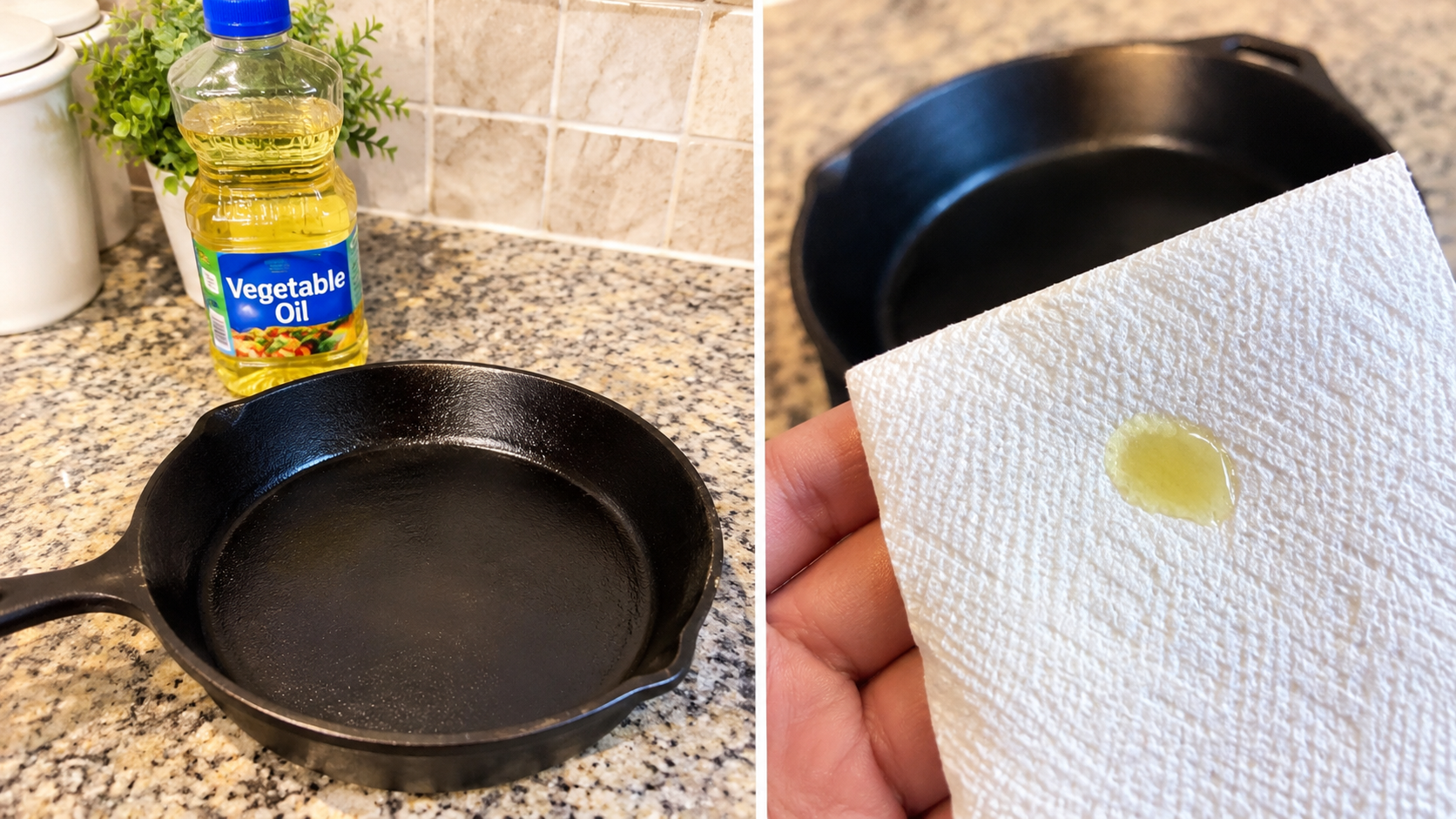
What Makes a Good Seasoning Oil?
To turn into a hard, non-stick layer, oil has to go through polymerization. This happens when fat is heated past its smoke point, causing it to bond directly to the iron surface.
A great seasoning oil needs two things:
-
- A high smoke point: The oil must handle oven temperatures around 450°F without turning into dusty ash.
- Unsaturated fats: Oils rich in polyunsaturated and monounsaturated fats form harder, smoother layers than heavy saturated fats.
The 5 Best Oils for Seasoning Cast Iron
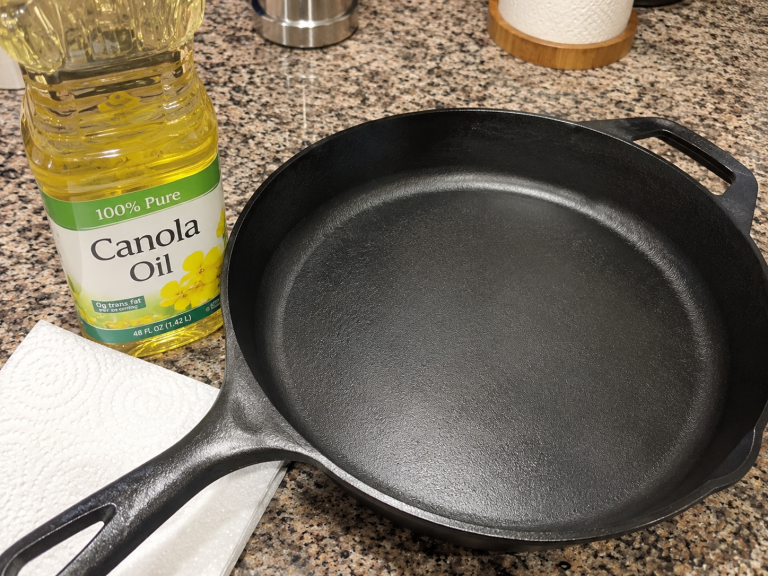
1. Canola Oil (Best Everyday Choice)
Canola oil is inexpensive, easy to find in every grocery store, and has a high smoke point of around 400°F to 450°F. Because it has a neutral smell and balanced fatty acids, it bakes into a smooth, reliable finish without filling your kitchen with heavy smoke.
2. Grapeseed Oil (Best for a Smooth, Dark Finish)
Many cast iron enthusiasts consider grapeseed oil the gold standard. It has a smoke point of 420°F and contains high levels of polyunsaturated fats, which polymerize into an extra-hard, glossy black coating. It costs a bit more than canola oil, but since you only use half a teaspoon per coat, one bottle lasts for years.
3. Vegetable Oil or Crisco Shortening (Best Traditional Option)
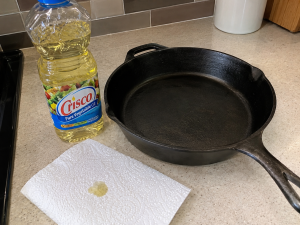
Standard soybean-based vegetable oil and solid vegetable shortening have protected cast iron pans for generations. Crisco is especially easy to apply because it does not run or drip while you wipe it across a warm skillet. Both options create a thick, durable barrier against rust.
4. Sunflower Oil (Best High-Heat Alternative)
Refined sunflower oil has a very high smoke point of around 440°F to 450°F. It spreads easily, leaves zero lingering food odors, and builds a tough coating that holds up well when searing steaks or frying at high temperatures.
5. Avocado Oil (Best for High-Temp Oven Baking)
Refined avocado oil boasts one of the highest smoke points in the kitchen at nearly 500°F. If you prefer baking your skillet at maximum oven temperatures, avocado oil will handle the heat without burning. Its only downside is the higher price tag compared to basic vegetable oils.
Quick Oil Comparison Chart
| Oil Type | Smoke Point | Finish Quality | Cost |
|---|---|---|---|
| Canola Oil | 400°F – 450°F | Smooth and durable | Low |
| Grapeseed Oil | 420°F | Very hard and glossy | Medium |
| Vegetable Shortening | 360°F – 490°F | Thick and protective | Low |
| Sunflower Oil | 440°F | Strong and neutral | Medium |
| Avocado Oil | 500°F | Ultra heat-resistant | High |
Oils You Should Never Use
Not every fat in your kitchen belongs on raw cast iron. Avoid these options when seasoning your pan:
-
- Extra Virgin Olive Oil: It has a low smoke point (around 325°F to 375°F). In a hot oven, it burns before it can bond properly, leaving behind a gummy residue.
- Butter, Bacon Grease, or Lard: While cooking bacon in a seasoned skillet is great, using animal fats for bare oven seasoning can turn rancid if the pan sits in a cabinet for a few weeks.
- Flaxseed Oil: Despite being popular on old internet blogs, pure flaxseed oil creates a brittle layer that is notorious for flaking and peeling off in black chips after a few months of cooking.
Final Verdict: Which One Should You Grab?
If you already have canola oil or vegetable oil in your cabinet, use it right away—it works wonderfully and costs pennies per coat. If you are buying a dedicated bottle just for cast iron maintenance, grab grapeseed oil for the slickest long-term finish.
Remember that the secret to great seasoning is never the brand of oil you buy. Wiping off almost all the oil with a dry towel before baking matters ten times more than which bottle you pour from.