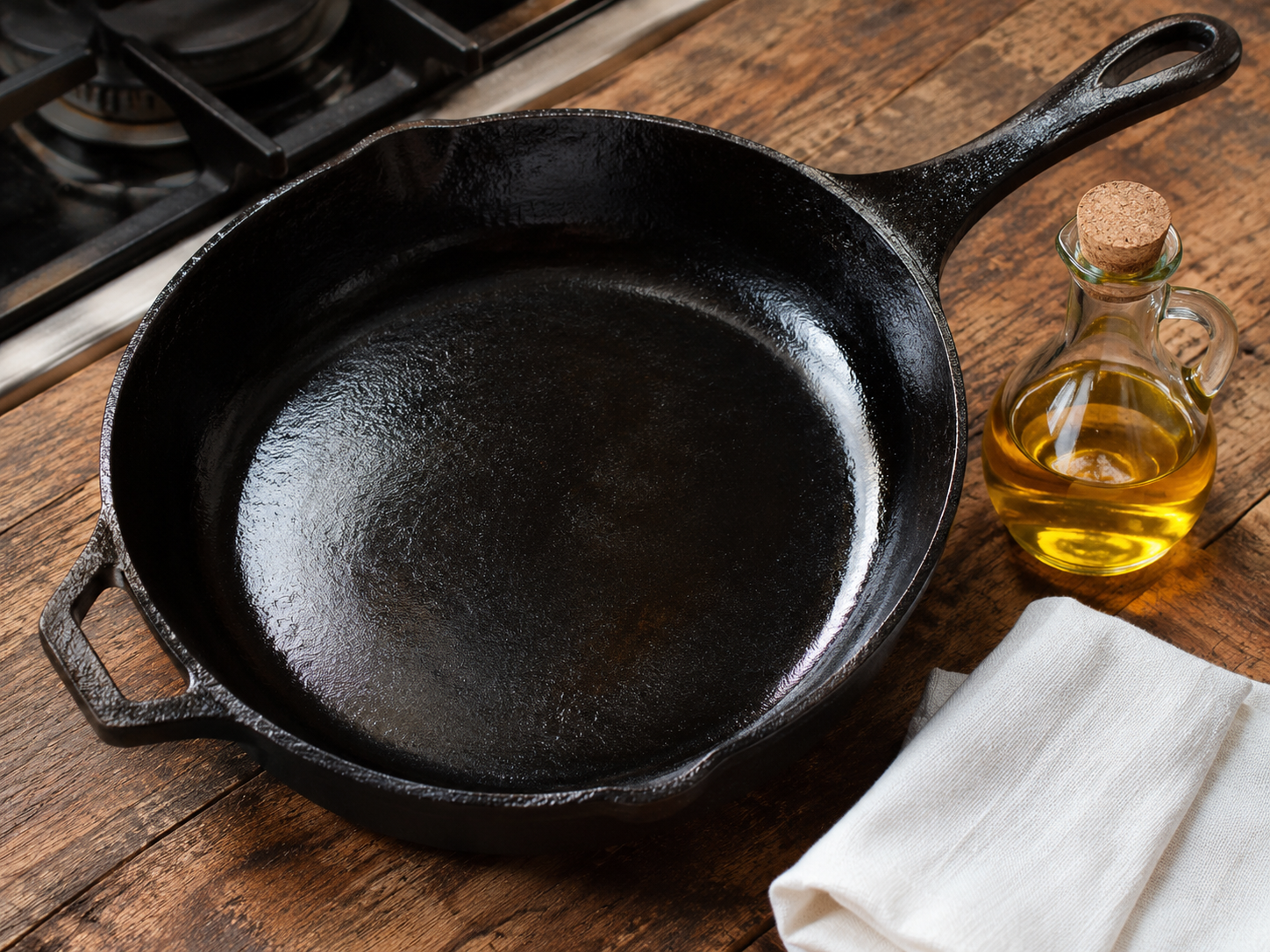
Best Oils for Seasoning Cast Iron Skillets (Smoke Points & Results Compared)
If you have ever seasoned a cast iron skillet only to remove a viscous, blotchy pan from the oven, the issue typically stems from two factors: using an excessive amount of oil or selecting the incorrect sort of fat.
Seasoning is not just a layer of grease sitting on top of metal. When heated past its smoke point, oil undergoes a chemical reaction called polymerization—transforming from a liquid fat into a hard, smooth, plastic-like carbon coating that bonds directly to the pores of the iron. Choosing an oil with the right fatty acid structure and smoke point makes the difference between a slick, non-stick surface and a gummy mess that flakes off into your food.
How Oil Choice Affects Your Seasoning Layer
Not all cooking oils polymerize the same way. Oils high in polyunsaturated and monounsaturated fats cross-link much faster and bond tighter to raw iron than heavy saturated animal fats. At the same time, your oven temperature needs to exceed the oil’s smoke point by roughly 25°F to 50°F (15°C to 25°C) so the oil breaks down and cures properly without burning into ash.
Top 5 Oils for Seasoning Cast Iron
1. Grapeseed Oil (Best Overall Choice)
Grapeseed oil is widely favored by cast iron enthusiasts because it hits the ideal balance between high polyunsaturated fat content and a forgiving smoke point.
-
- Smoke Point: ~420°F (215°C)
- Best Oven Temperature: 450°F (230°C)
- Why It Works: It polymerizes into a deep, dark bronze-to-black finish that resists flaking and rarely turns sticky when wiped thin.
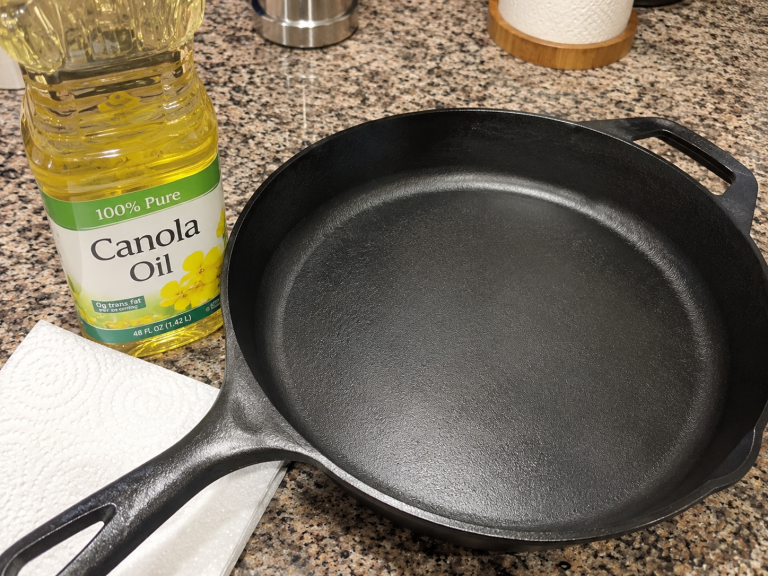
2. Canola or Rapeseed Oil (Best Budget & Everyday Option)
Standard refined canola oil is inexpensive, easy to find in any grocery store, and already used by major cookware manufacturers (including Lodge) to pre-season their pans at the factory.
-
- Smoke Point: ~400°F (204°C)
- Best Oven Temperature: 450°F (230°C)
- Why It Works: It delivers a reliable, durable coat without requiring high oven heat or expensive specialty bottles.
3. Refined Avocado Oil (Best for High-Heat Searing)
If you primarily use your skillet for high-heat searing—such as charring steaks, roasting vegetables at maximum oven heat, or cooking over open flames—refined avocado oil holds up better under extreme temperatures.
-
- Smoke Point: ~500°F to 520°F (260°C to 270°C)
- Best Oven Temperature: 500°F (260°C)
- Why It Works: Because it has the highest smoke point of common kitchen oils, it is less likely to burn off the center of your skillet when preheating over a high gas burner. (Note: Always buy refined avocado oil for seasoning; unrefined virgin avocado oil smokes too early and leaves residue.)
4. Refined Sunflower or Safflower Oil
Both refined sunflower and safflower oils offer neutral flavors, high smoke points, and strong polymerization properties.
-
- Smoke Point: ~440°F to 450°F (225°C to 232°C)
- Best Oven Temperature: 475°F (245°C)
- Why It Works: They cure evenly and create a hard, glossy base layer on newly stripped or bare gray cast iron.
5. Crisco (Vegetable Shortening)
Traditional solid vegetable shortening (made from soybean and palm oils) remains a classic choice for restoring vintage skillets.
-
- Smoke Point: ~490°F (254°C)
- Best Oven Temperature: 475°F to 500°F (245°C to 260°C)
- Why It Works: Because it starts solid at room temperature, it is easy to control how much you apply without accidentally pouring a puddle into the pan.
Oils You Should Avoid for Oven Seasoning
-
- Extra Virgin Olive Oil: Has a low smoke point (~325°F to 375°F) and contains organic plant particles that burn, smoke heavily, and leave a gummy residue.
- Butter, Ghee, or Bacon Grease: While cooking bacon in an already-seasoned pan is fine, using animal fats for initial oven seasoning traps moisture and proteins that can turn rancid if the pan sits unused in a cabinet.
- Flaxseed Oil (Proceed With Caution): Although flaxseed oil creates an ultra-hard, glass-like shine initially, many home cooks find that it becomes brittle and flakes off in chips after a few months of real cooking.
Quick Comparison Table
| Oil Type | Smoke Point | Recommended Oven Temp | Durability & Finish |
|---|---|---|---|
| Grapeseed Oil | 420°F (215°C) | 450°F (230°C) | Very hard, dark, reliable finish |
| Canola Oil | 400°F (204°C) | 450°F (230°C) | Durable, affordable, easy to apply |
| Refined Avocado Oil | 500°F+ (260°C) | 500°F (260°C) | Best for high-heat searing |
| Refined Sunflower Oil | 440°F (225°C) | 475°F (245°C) | Smooth, even base coat |
| Vegetable Shortening | 490°F (254°C) | 480°F (250°C) | Great for vintage pan restoration |
3 Rules for a Non-Sticky Finish (Regardless of Oil)
-
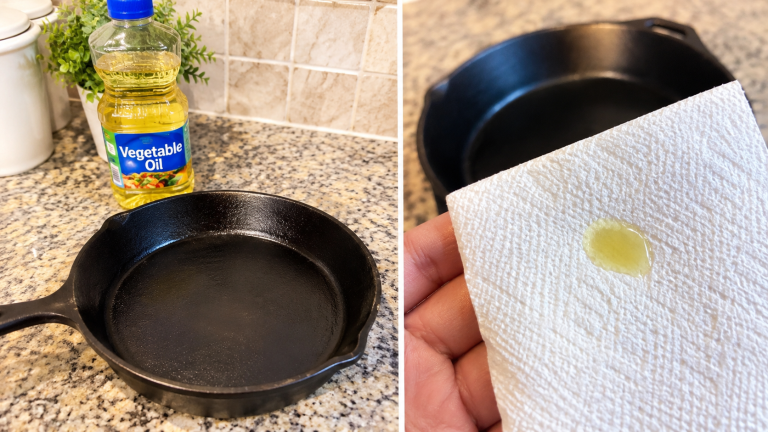
- Wipe Like You Made a Mistake: After rubbing a few drops of oil across the entire skillet, take a clean, lint-free cotton cloth or paper towel and wipe the pan as if you are trying to remove every trace of oil. A microscopic film is all you need—excess oil pools into sticky droplets.
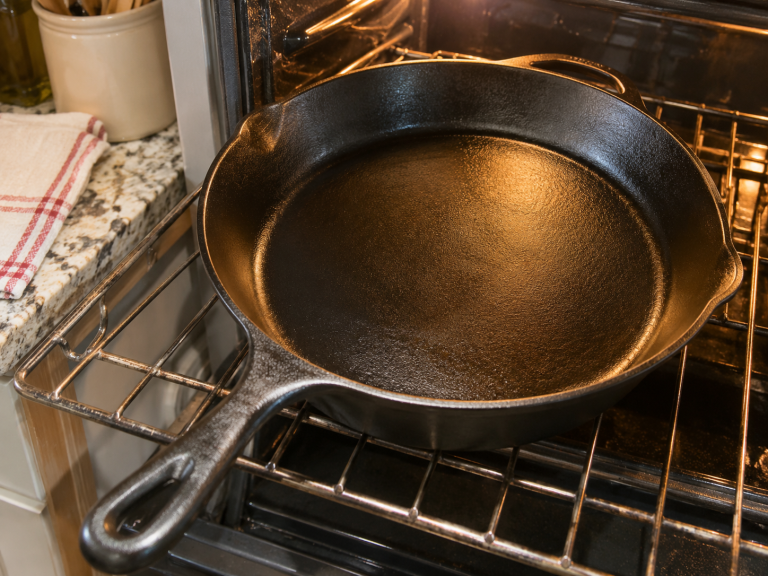
- Bake Upside Down: Place the skillet upside down on the middle oven rack with a foil-lined baking sheet on the lower rack beneath it to catch any stray drips.
- Cool Inside the Oven: Bake for a full 60 minutes, then turn off the oven and leave the door closed until the pan cools completely. Sudden temperature drops can stress the iron and interrupt final curing.
Quick Publishing Tips for WordPress
-
- Category: Assign this post to Seasoning so that navigation link on your homepage fills up.
- Personal Touch: If you have a bottle of canola, sunflower, or mustard/groundnut oil in your own kitchen, add one short 2-sentence note at the bottom sharing which one you personally use—that real-world detail helps build trust with readers and search crawlers.
Would you like me to write another article for your Seasoning category next (such as “How to Season a Brand-New Cast Iron Skillet Step by Step” or “How to Fix Sticky Cast Iron Seasoning”), so your Seasoning menu looks completely full?