Why Does Cast Iron Seasoning Flake or Peel?
Seasoning is simply baked-on oil that bonds to raw iron at high heat. When that bond fails, the coating cracks and lifts away. Here are the five main reasons this happens:
1. You Used Flaxseed Oil
Several years ago, a viral blog post claimed that flaxseed oil was the ultimate secret to seasoning cast iron. Thousands of home cooks tried it, and almost all of them ended up with peeling pans. While flaxseed oil creates a gorgeous, shiny black finish at first, it cures into an extremely hard, brittle shell. Because iron expands and contracts every time you heat and cool the pan on your stove, a brittle coating cannot flex with the metal and eventually snaps off in sheets.
2. Your Seasoning Layers Were Applied Too Thickly
When you wipe too much oil onto a pan before baking, the outside skin hardens while the bottom layer stays soft and weak. Over time, heat breaks down that weak under-layer, causing the top crust to bubble up and peel away.
3. Cooking Acidic Foods Too Early
Tomatoes, lemon juice, vinegar, and wine are heavily acidic. While a well-aged skillet with years of seasoning can handle a quick pan sauce, simmering acidic ingredients in a newly seasoned skillet eats right through thin layers of polymerized oil, leaving dull gray patches behind.
4. Smooth Vintage Pans vs. Rough Modern Pans
Modern skillets from brands like Lodge have a slightly pebbled, textured surface straight from the factory. That rough texture acts like tiny teeth, giving oil plenty of grip. Vintage skillets (or modern machined skillets) are polished mirror-smooth. While smooth iron is wonderful to cook on, seasoning has a harder time grabbing onto slick metal and peels much more easily if you rush the process.
5. Extreme Temperature Shock
Placing a cold skillet directly over a roaring high flame causes the metal to expand unevenly, putting sudden stress on the seasoning layer. Similarly, pouring cold water into a piping-hot pan to clean it causes rapid contraction that can crack the seasoning right off the surface.
How to Fix a Flaking Cast Iron Skillet Step by Step
You do not need to strip your entire pan down to bare silver metal with harsh oven cleaners unless the whole pan is peeling off in huge sheets. In most cases, you only need to knock off the loose flakes and build fresh layers over the solid spots.
Step 1: Scrub Away All Loose Flakes
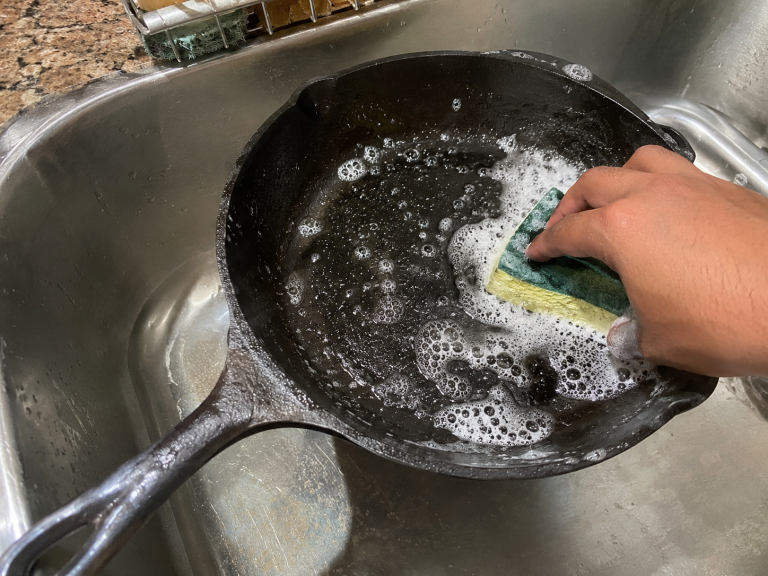
Put your skillet in the sink and scrub the cooking surface firmly using hot water and a chainmail scrubber, a stiff nylon brush, or a heavy-duty scouring pad. Your goal is to scrape off every single piece of seasoning that is already loose or lifting. Do not worry if your pan ends up looking patchy with dark spots and dull gray bare iron—that is completely normal.
Step 2: Wash and Dry the Pan Thoroughly
Wash the scrubbed skillet with warm water and a small drop of mild dish soap to clear away all the loose black specks and grease. Rinse it thoroughly, dry it with a kitchen towel, and place it on your stove over low heat for 3 to 5 minutes. Evaporating every hidden drop of water prevents flash rust from forming before you apply oil.
Step 3: Choose a Flexible, High-Heat Oil
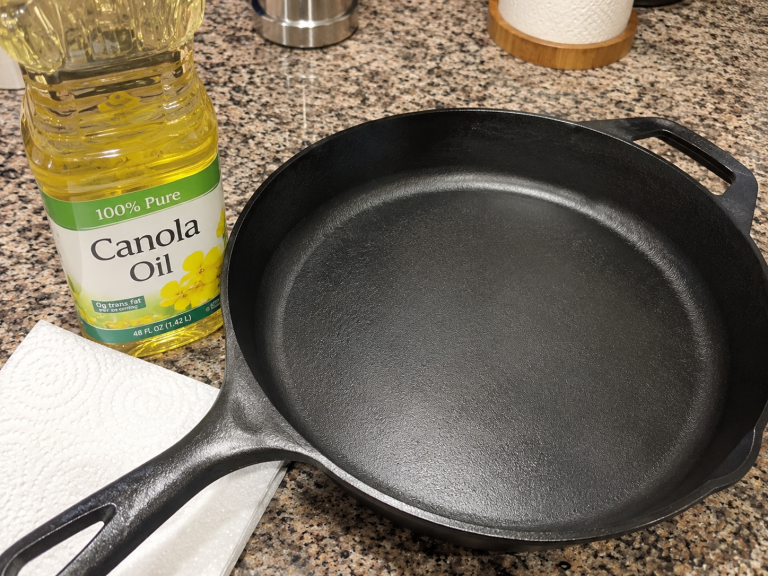
Put the flaxseed oil away and grab canola oil, grapeseed oil, sunflower oil, or Crisco vegetable shortening. These oils cure into a slightly flexible, tough polymer layer that expands and contracts smoothly alongside the iron without cracking.
Step 4: Apply an Ultra-Thin Coat of Oil
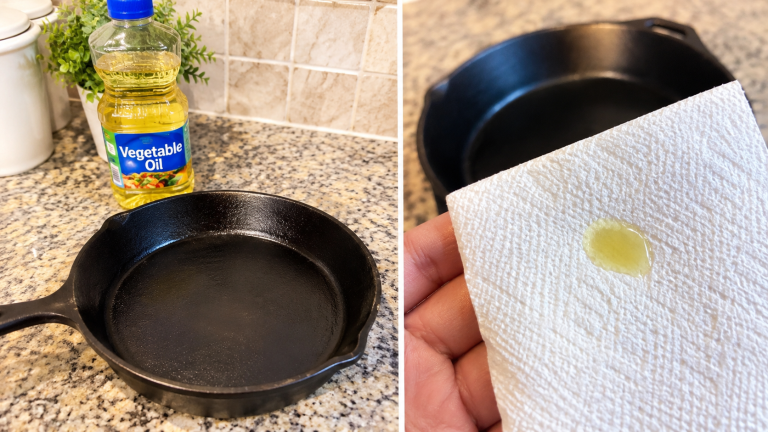
Turn off the stove and let the pan cool slightly so you do not burn your fingers. Pour half a teaspoon of oil into the skillet and wipe it across the entire inside, sidewalls, bottom, and handle using a folded paper towel.
Next, take a clean, dry paper towel and wipe off as much oil as you possibly can. The pan should look completely dry, with only a faint satin sheen left behind.
Step 5: Bake Upside Down at 450°F (230°C)
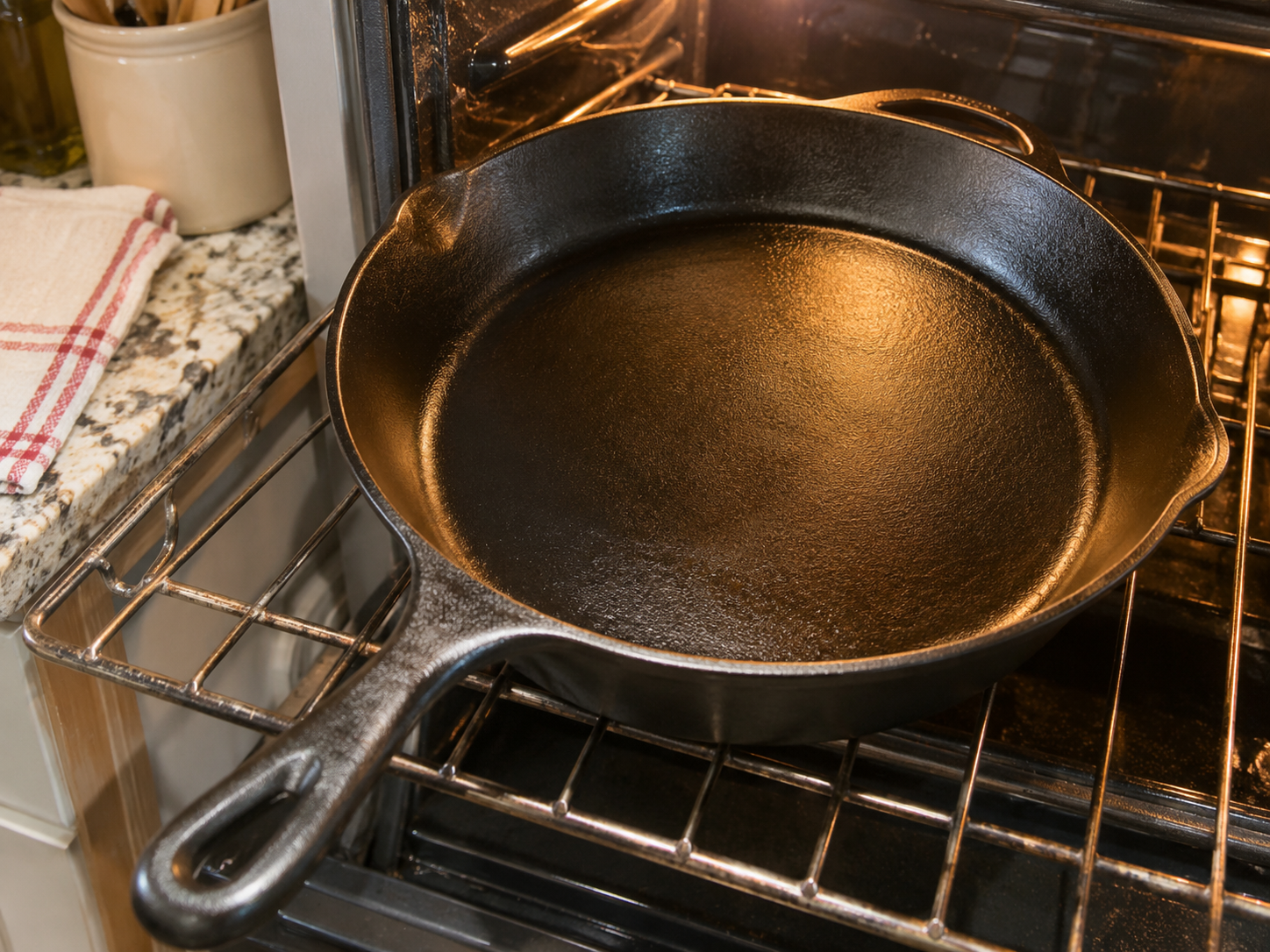
Preheat your oven to 450°F (230°C) and place a sheet of aluminum foil on the bottom rack to catch any drips. Place your skillet upside down on the middle rack and bake it for 1 full hour. Turn the oven off and leave the pan inside with the door closed until it cools completely.
Step 6: Repeat Two More Times
Because bare gray patches of iron need extra protection, repeat Steps 4 and 5 two or three times. Building three microscopic, ultra-thin coats creates a far stronger bond than one thick coat ever could.
5 Habits to Keep Your Seasoning From Ever Peeling Again
Once you restore your skillet, follow these simple kitchen habits to keep the surface intact for years:
-
- Preheat Slowly: Always warm your skillet over low heat for 3 to 4 minutes before turning the burner up to medium. Gradual heating lets the iron and the seasoning expand together gently.
- Use a Flat Metal Spatula: Cooking with a flat-edged stainless steel spatula gently scrapes away tiny weak spots of carbon buildup during everyday cooking while smoothing out the strong seasoning layers underneath.
- Cook Fatty Foods First: For the first two weeks after re-seasoning, cook meals rich in natural fats—like bacon, sausage, sautéed onions, cornbread, or shallow-fried potatoes.
- Never Soak in the Sink: Leaving a cast iron skillet underwater softens the seasoning bond and invites rust underneath the surface. Clean your pan right after dinner while it is still warm.
- Dry on the Stove Every Single Time: After rinsing your skillet, always wipe it with a towel and warm it on a low burner for two minutes, followed by a tiny drop of oil wiped thin across the inside.
Frequently Asked Questions
Are black seasoning flakes dangerous if I accidentally eat them?
No. Flaking seasoning is just baked cooking oil (carbon). While nobody wants black specks in their scrambled eggs, eating a tiny flake is completely harmless to your health.
Should I strip my skillet completely if only the center is flaking?
No. Stripping an entire skillet takes hours of heavy scrubbing or chemical soaking. Scrubbing off just the loose flakes in the center and baking two fresh coats of oil on top blends right into the existing seasoning over time.
Why is the outside bottom of my skillet peeling?
High gas flames or electric coils hit the bottom of the pan directly, which can burn off seasoning faster than on the cooking surface. Simply rub a tiny drop of oil onto the bottom of your pan once a month before storing it away.