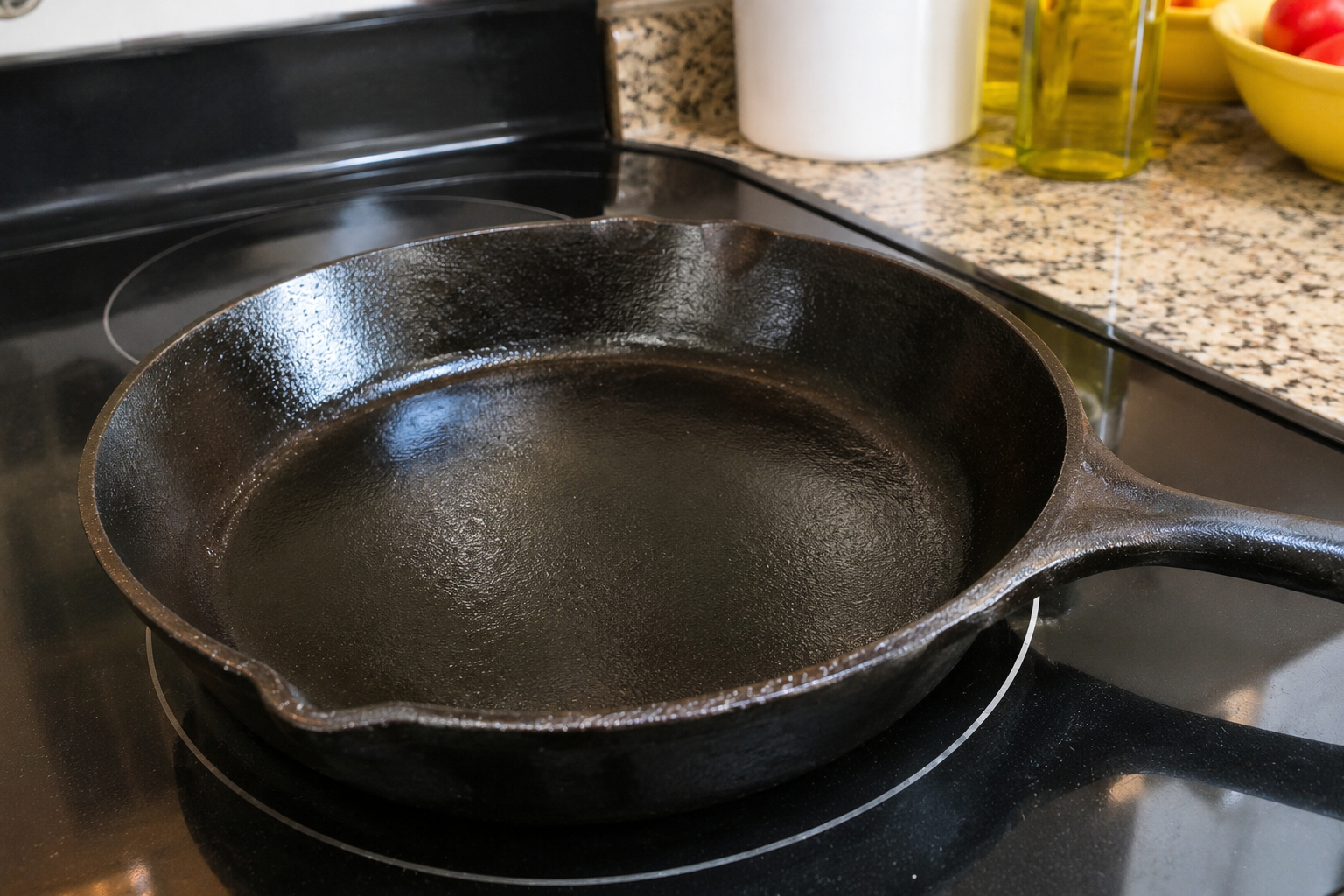
How to Safely Use a Cast Iron Skillet on a Glass Electric Stove
If you have a smooth glass-top electric or induction stove, you have probably heard warnings that heavy cast iron skillets will scratch, crack, or shatter the glass surface. Because a 12-inch cast iron pan can weigh up to eight pounds—and often has a slightly rough, pebbled bottom—many home cooks leave their best skillets sitting in the cabinet out of fear of ruining an expensive cooktop.
The good news is that you can safely cook with cast iron on a glass stove every single day without leaving a single scratch. Glass-ceramic cooktops are engineered to handle heavy cookware and extreme temperatures. As long as you follow a few simple habits—like lifting instead of sliding and preheating gradually—your cast iron skillet and glass cooktop will work together effortlessly.
Why People Worry About Cast Iron on Glass Cooktops
Understanding the actual risks helps you prevent accidents before they happen:
-
- Micro-Scratches From Sliding: Raw iron is harder than glass-ceramic surfaces. Dragging, shaking, or sliding a heavy skillet across the burner acts like coarse sandpaper, leaving permanent dull gray scuff marks on the glass.
- Cracks From Dropping: While glass cooktops easily support heavy pots sitting still, dropping a heavy cast iron pan from even a few inches above the surface can chip or crack the glass panel.
- Uneven Heating and Thermal Shock: Smooth electric burners cycle on and off under the glass. Blasting a cold cast iron pan on maximum high heat creates intense localized heat that can warp the pan’s bottom or trigger the stove’s automatic shut-off sensor.
6 Golden Rules for Using Cast Iron on a Glass Stove
Follow these six easy rules every time you cook to keep both your skillet and your stovetop looking brand new:
1. Always Lift—Never Slide or Shake the Pan
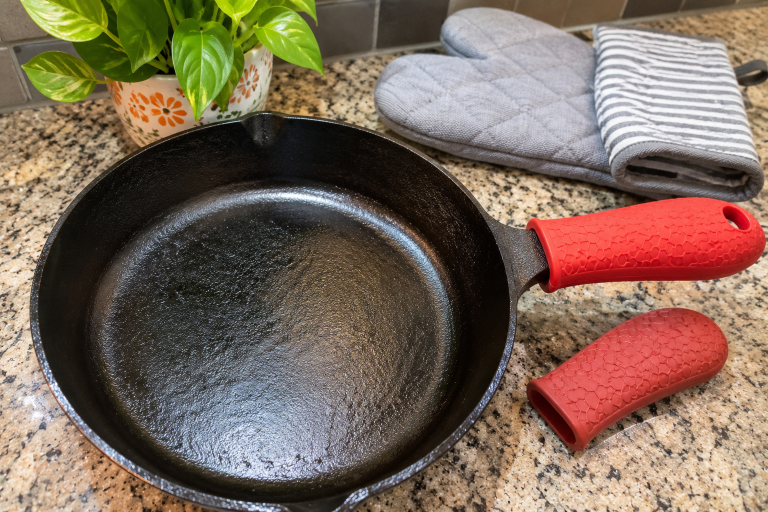
This is the single most important rule. Whenever you need to move your skillet, reposition it over a burner, or flip food, lift the pan straight up off the glass with both hands (using oven mitts) and set it down gently. Never shake the pan back and forth across the burner like restaurant chefs do on gas grates.
2. Keep Both the Glass Top and Pan Bottom Spotless
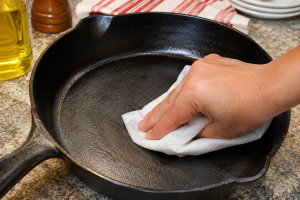
Tiny grains of salt, sugar, or burnt crumbs trapped between a heavy cast iron pan and a glass stove act like tiny diamond cutters when pressed down by eight pounds of iron. Before setting your skillet on the burner, wipe the glass surface clean and run a dry paper towel across the bottom of your skillet to brush away any grit.
3. Match the Skillet Size to the Burner Ring
Glass cooktops have printed circles showing the exact heating element underneath. Always place your skillet on a burner ring that matches the bottom diameter of your pan as closely as possible. Putting a huge 12-inch skillet over a tiny 6-inch burner heats only the center of the pan while leaving the outer rim cold, which can cause warping over time.
4. Preheat Slowly on Low Heat
Smooth electric burners deliver concentrated heat directly against the flat bottom of your pan. Start your burner on low (level 2 or 3) for 3 to 5 minutes, then step up gradually to medium or medium-high. Never turn a glass-top burner straight to “High” under an empty cast iron skillet.
5. Check That Your Skillet Sits Completely Flat
Before cooking on glass, place your cool skillet on a flat countertop and tap the edges. Vintage skillets or pans damaged by high heat sometimes develop a slight outward bow on the bottom (called a “spinner”). A warped skillet wobbles on smooth glass, scrapes the surface when you stir food, and heats poorly. Stick to flat-bottomed skillets for glass stoves.
6. Smooth Out Rough Factory Bottoms (Optional Trick)
Brand-new budget skillets sometimes have tiny rough metal burrs on the bottom ring from the factory casting mold. Before using a new pan on glass, rub the bottom ring lightly with a piece of 100-grit sandpaper for 30 seconds, wash it, and rub a tiny drop of oil onto the bottom. Smoothing down sharp burrs eliminates the risk of accidental scratches.
What About Induction Glass Stoves?
If your glass stove is an induction cooktop, cast iron is actually one of the absolute best cookware materials you can own. Because induction heats the iron directly using magnetic fields rather than heating the glass underneath, your skillet heats up faster and more evenly than on any other stove type.
Bonus Tip for Induction: You can even place a sheet of parchment paper or a thin silicone baking mat directly between your cast iron skillet and an induction cooktop while cooking at low-to-medium temperatures. The magnetic field passes straight through the paper to heat the pan while protecting your glass from every possible scuff or oil splatter! (Note: Never put paper or silicone on standard radiant electric glass stoves, as the glass itself gets red-hot and will burn the paper).
How to Remove Gray Marks From a Glass Cooktop
If you accidentally slide your cast iron skillet and notice faint silver-gray marks on the glass, do not panic—those marks are usually metal transfer rubbed off the pan, not deep scratches in the glass itself.
-
- Step 1: Let the glass cooktop cool completely to room temperature.
- Step 2: Apply a dab of ceramic cooktop cleaner (such as Weiman or Cerama Bryte) or a thick paste of baking soda and water directly over the mark.
- Step 3: Buff firmly in small circles with a non-scratch microfiber cloth or glass-safe scrubbing pad for 60 seconds, then wipe clean with a damp towel. In most cases, the gray mark vanishes completely.
Frequently Asked Questions
Will the weight of a full cast iron Dutch oven break my glass stove?
No. Modern glass-ceramic cooktops are tested to hold up to 40 to 50 pounds of static weight safely. A full cast iron skillet or Dutch oven weighs between 8 and 18 pounds, which is well within safe limits—as long as you set it down gently rather than dropping it.
Should I use a heat diffuser ring on my glass stove?
No. Most glass stove manufacturers warn against using metal heat diffuser plates because they trap intense heat directly against the glass surface, which can crack the cooktop or trip thermal safety breakers. Preheating your cast iron slowly on low heat achieves even heating safely without extra gadgets.