How to Fry Eggs on a Cast Iron Skillet Without Sticking
Frying an egg is the ultimate stress test for any cast iron skillet. While searing a thick steak or baking cornbread feels effortless, cracking a delicate egg into heavy iron often ends in a frustrating, torn mess welded to the bottom of the pan. Many beginners assume their skillet needs ten more rounds of oven seasoning before it can ever cook eggs cleanly.
In reality, sliding eggs out of a cast iron skillet has very little to do with seasoning and almost everything to do with temperature control and fat timing. Even a brand-new, factory-seasoned skillet can fry smooth, intact eggs on day one once you master a simple three-minute stovetop technique.
Why Do Eggs Stick to Cast Iron?
To stop eggs from sticking, it helps to understand what happens at a microscopic level when raw egg whites hit metal:
-
- Microscopic Pores: Even well-seasoned cast iron has tiny peaks and valleys across its surface. When raw liquid protein touches cold or uneven metal, it sinks into those tiny pores and bonds tightly as it cooks.
- Too Much Heat: Cranking the burner to medium-high or high scorches the bottom of the egg white instantly before it can set, fusing it to the pan like glue.
- Cold Eggs Straight From the Fridge: Ice-cold eggs rapidly drop the surface temperature of the skillet right where they land, breaking the thermal barrier that keeps food gliding smoothly.
What You Will Need
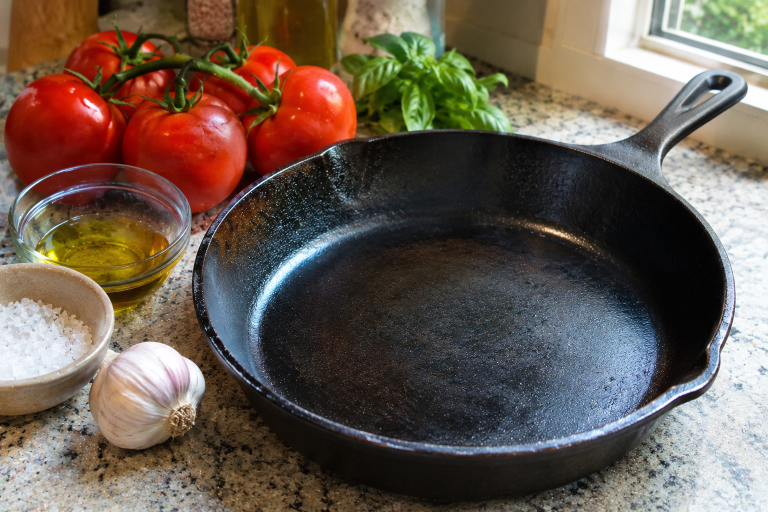
Gather everything beside your stove before turning on the burner, because eggs cook fast:
-
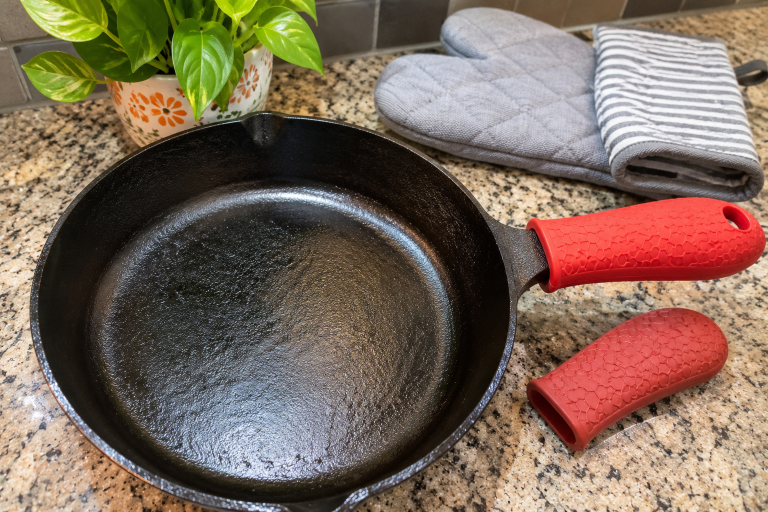
- A clean, dry cast iron skillet (8-inch or 10-inch works best for 1 to 3 eggs)
- 2 or 3 fresh eggs (let them sit on the counter for 10 minutes if possible)
- 1 tablespoon of real butter or ghee (butter works noticeably better for eggs than liquid oil)
- A thin, flat-edged metal spatula or flexible fish turner
Step-by-Step Guide to Non-Stick Cast Iron Eggs
Step 1: Preheat the Skillet Slowly Over Low Heat
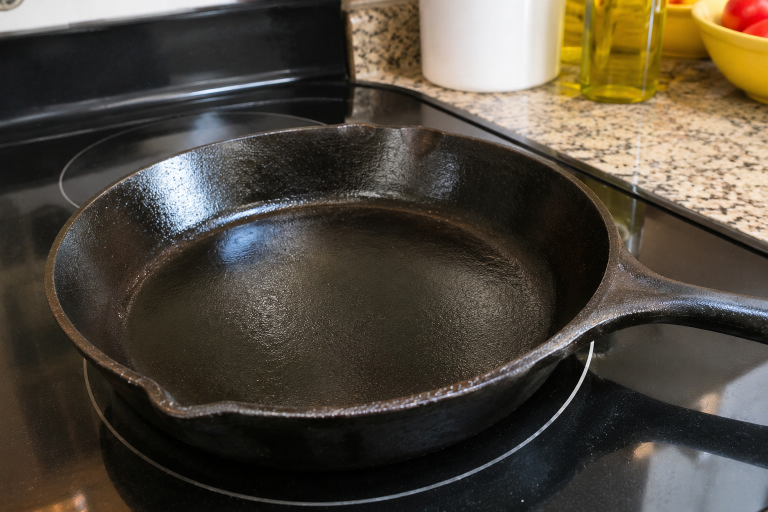
Place your dry cast iron skillet on the burner and turn the heat to low (or level 2 out of 10). Let the empty pan warm up gradually for 3 to 5 minutes.
Cast iron heats slowly and holds onto heat aggressively. Giving the iron a few minutes on low allows the heat to spread evenly from the center all the way to the outer edges without creating scorching hot spots.
Step 2: Do the “Water Drop” or Hand Test
Hold your palm about two inches above the center of the skillet. You should feel a gentle, steady warmth radiating upward—never fierce, blistering heat. If you flick a single tiny drop of water into the pan, it should sizzle softly and evaporate in two seconds, not violently pop and vanish instantly.
Step 3: Add Butter (Not Just Oil)
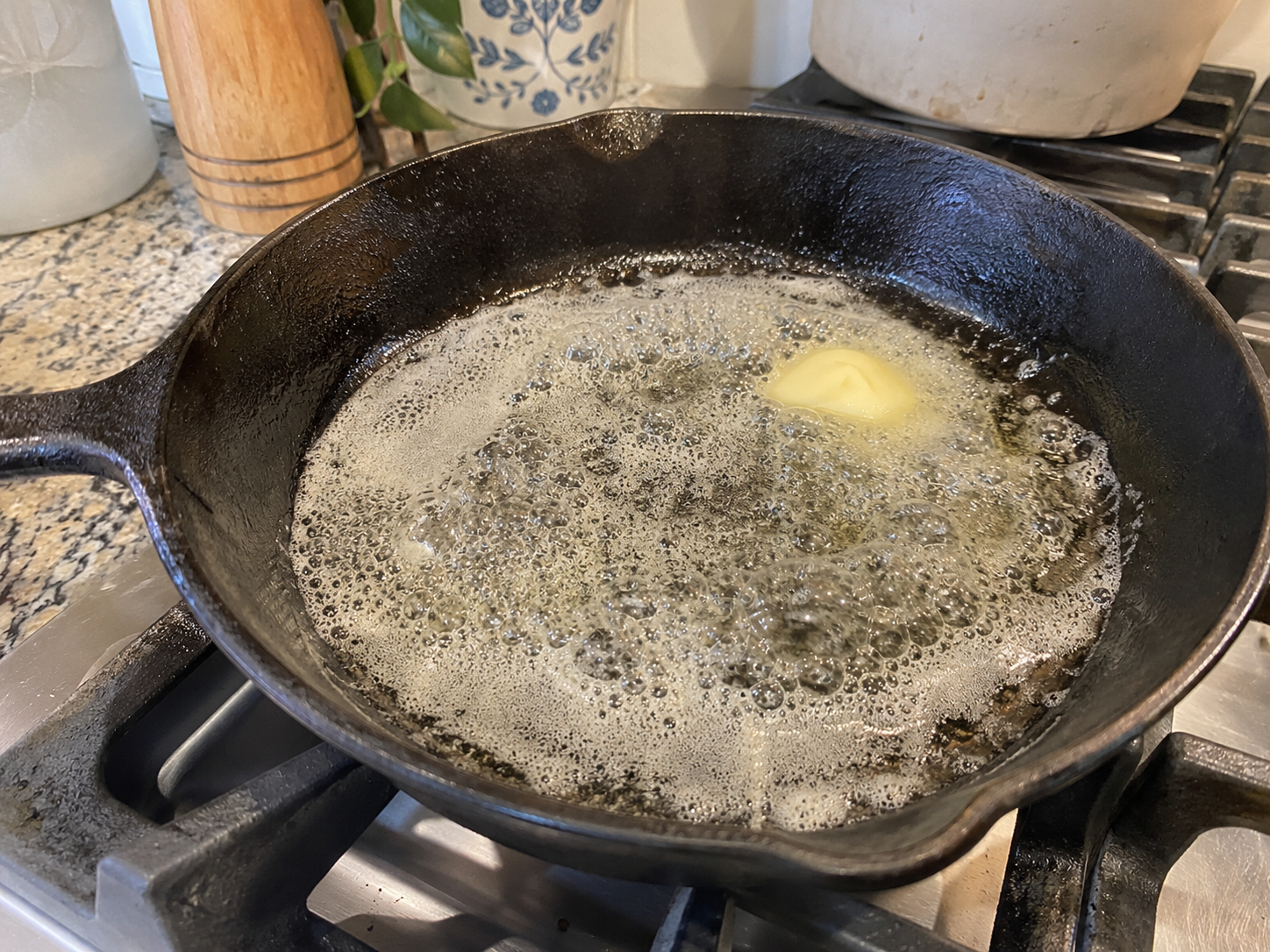
Drop 1 tablespoon of unsalted or salted butter into the warm skillet and swirl the pan so it coats the entire cooking surface.
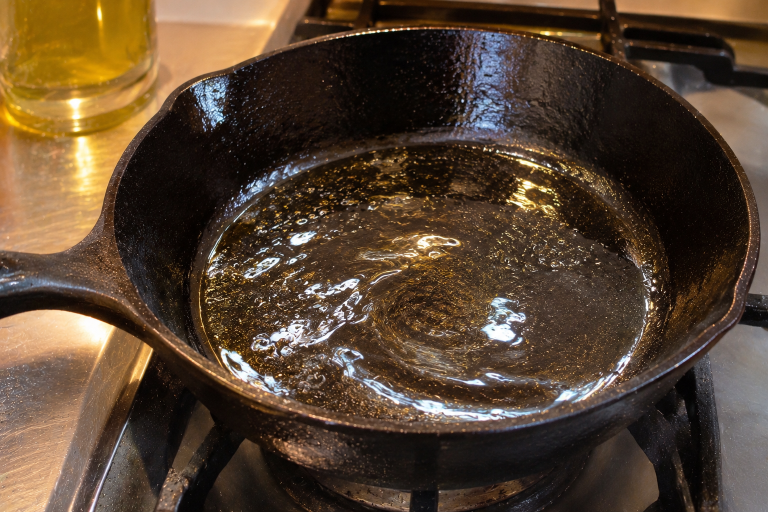
Watch how the butter behaves—this is your built-in temperature gauge:
-
- Too Cold: The butter melts slowly without bubbling at all. Wait 30 more seconds.
- Just Right: The butter melts quickly and foams gently with tiny bubbles without turning brown or smoking.
- Too Hot: The butter sizzles violently, turns dark brown, and smokes. Take the pan off the burner for 60 seconds to cool down before adding your eggs.
Step 4: Crack Your Eggs Gently Into the Foaming Butter
Crack your eggs into a small bowl first, then slide them gently into the center of the foaming butter. Using a bowl prevents broken yolks and lets you place the eggs cleanly right into the melted fat.
Step 5: Leave Them Alone for 60 Seconds
Resist the urge to poke, prod, or push the eggs right after they hit the pan. Raw egg whites need about 45 to 60 seconds over low heat to set their bottom layer into a firm, cohesive sheet. Once the bottom proteins coagulate, they naturally pull away from the iron.
Step 6: Slide a Thin Spatula Underneath and Serve
Take a thin, flat metal spatula or silicone turner and gently nudge the edge of the egg white. It should lift cleanly with zero resistance. Slide the spatula underneath to flip the egg for over-easy, or cover the skillet with a lid for 45 seconds to steam the tops for sunny-side-up eggs.
3 Pro Tips for Effortless Cast Iron Eggs
-
- Use Butter Instead of Olive Oil: Butter contains natural milk solids and water that create a microscopic cushion of steam underneath the egg white, making it slide far easier than pure liquid cooking oils.
- Cook Bacon First: If you are making bacon and eggs for breakfast, cook your bacon in the cold skillet first over medium-low heat. Pour off most of the excess grease, leave about a tablespoon behind, lower the burner to low, and drop your eggs straight into the warm bacon fat.
- Invest in a Fish Spatula: A thin, flexible stainless steel fish turner slides right under delicate egg yolks without tearing them, unlike thick plastic spatulas.
Frequently Asked Questions
What if a tiny bit of egg white still sticks to the pan?
Do not panic and do not scrub your skillet with steel wool. Let the pan cool for 5 minutes, rinse it under hot water with a soft nylon brush or chainmail scrubber, dry it on a low stove burner for 2 minutes, and wipe 2 drops of oil across the surface. Every time you cook with fat, your skillet’s non-stick surface improves.
Can I scramble eggs in cast iron without sticking?
Yes! Follow the exact same low-heat preheat and foaming butter steps. Pour whisked eggs into the pan, let the bottom set for 20 seconds, then gently push the cooked curds toward the center with a wooden spatula. Turn off the burner while the eggs still look slightly glossy—the residual heat in the heavy iron will finish cooking them gently without scorching.