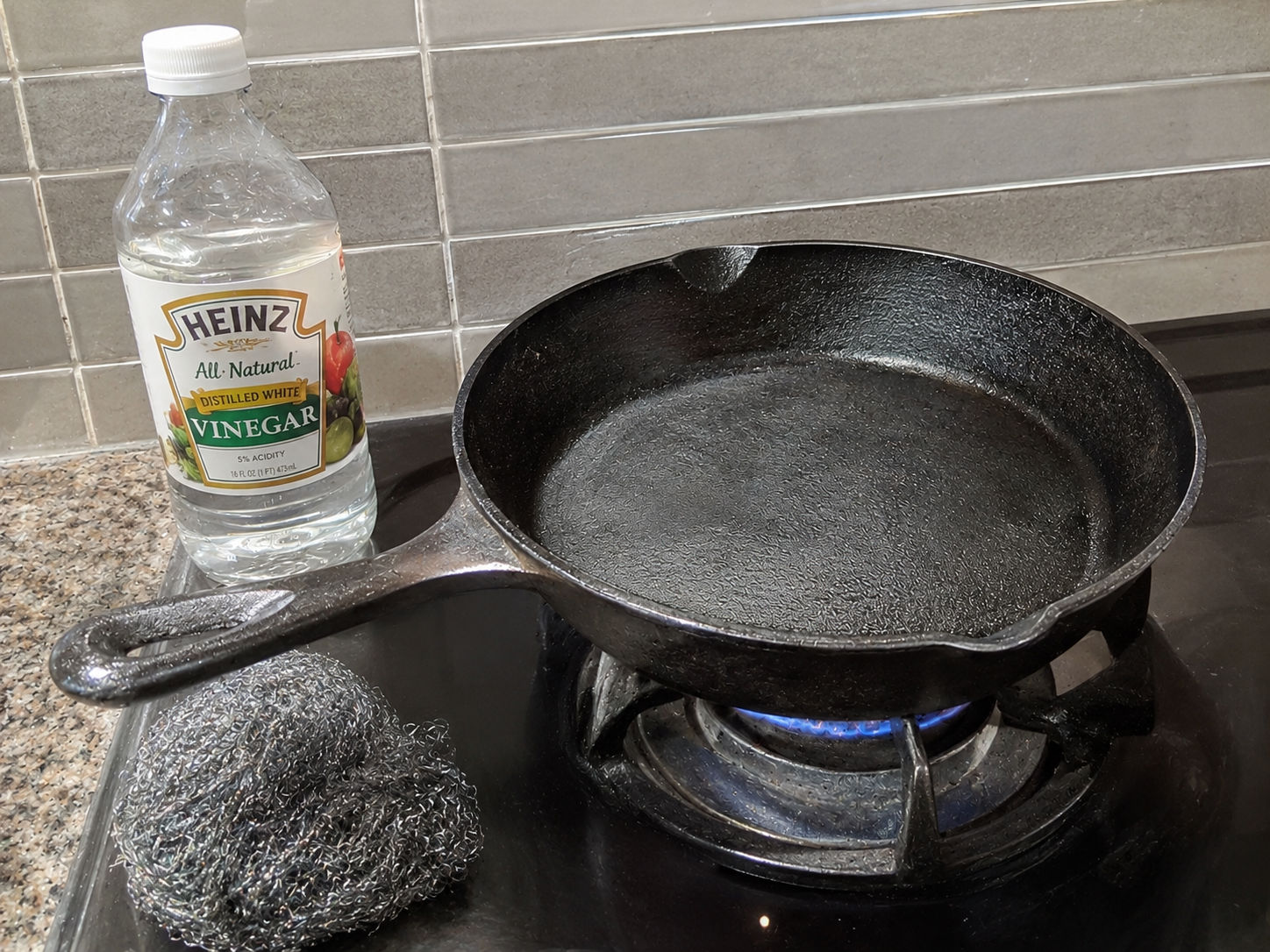
How to Safely Remove Rust from an Old Cast Iron Pan
Finding a forgotten cast iron skillet in the back of a pantry, at a yard sale, or inside a relative’s garage can feel like striking gold—until you flip it over and see bright orange rust covering the metal. Many people assume a rusty pan is ruined and toss it straight into the trash.
In reality, surface rust on cast iron is almost never fatal. Because cast iron is solid metal all the way through, you can scrub off decades of orange buildup and restore the skillet to a smooth, jet-black cooking surface in a single afternoon. You do not need harsh industrial chemicals or power tools—just basic household supplies from your kitchen pantry.
Is Surface Rust Dangerous?
Eating off a heavily rusted pan is unpleasant because it makes food taste metallic and leaves orange flakes in your meal. However, minor surface rust is easy to clean off completely.
Before you start scrubbing, inspect the pan carefully:
-
- Safe to Restore: Orange dust, crusty surface spots, and dull gray patches can all be scrubbed away easily.
- Unsafe to Restore: Deep pitting that eats halfway through the metal, visible cracks running across the cooking surface, or a warped bottom that wobbles violently on a flat counter usually mean the pan is better kept as wall decor.
What You Will Need
Choose your supplies based on how heavy the rust is:
For Light Surface Rust:
-
- Steel wool scouring pads (medium grade) or a stiff wire brush
- Mild dish soap and warm water
- Coarse kosher salt and half a raw potato (optional natural scrubber)
- Canola or grapeseed oil
For Heavy, Stubborn Rust:
-
- Distilled white vinegar
- Cold tap water
- Baking soda (to neutralize the vinegar)
- A large plastic tub or sink big enough to hold the entire pan
Method 1: Scrubbing Light Surface Rust (15 Minutes)
If your skillet only has a few orange spots from being left wet in the sink overnight, you do not need to soak it in vinegar.
Step 1: Scrub Away the Orange Spots
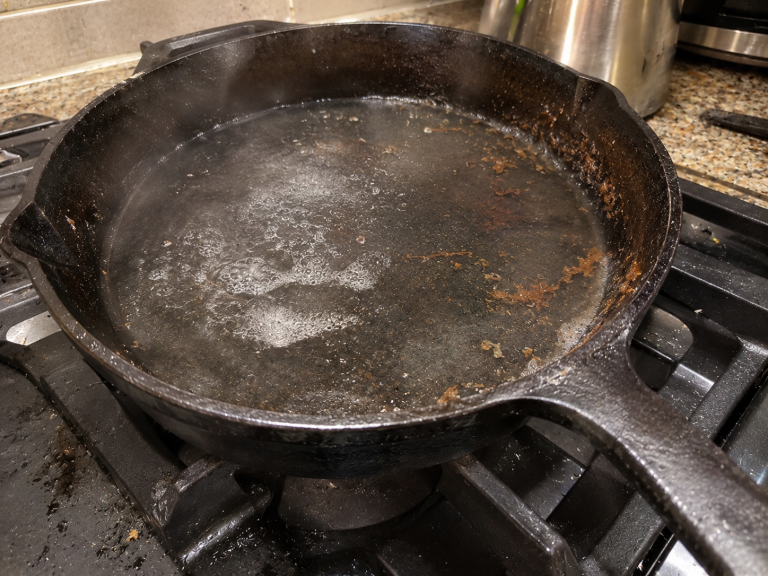
Hold the skillet under warm running water and scrub the rusty areas firmly with a steel wool pad or chainmail scrubber. Apply steady pressure until the orange color disappears and you see dull, silver-gray raw iron underneath.
Step 2: Wash and Dry Immediately
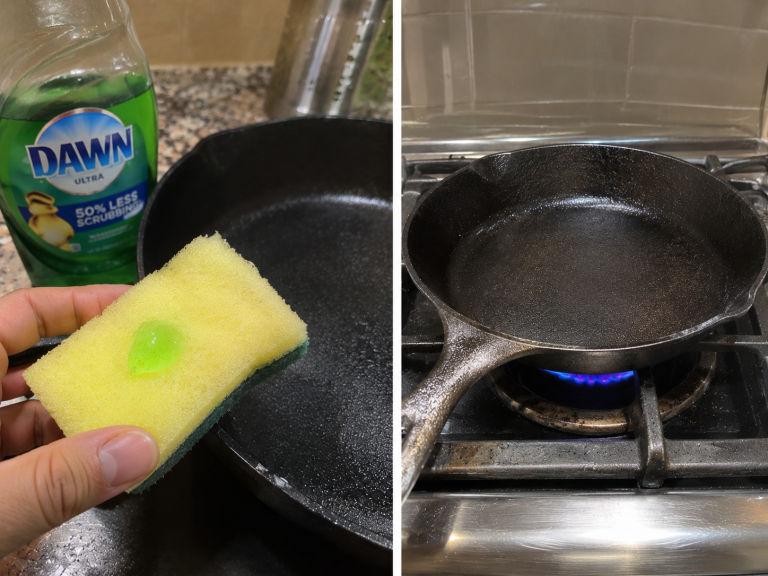
Wash the entire pan with warm water and a few drops of mild dish soap to clear away all loose rust dust. Rinse thoroughly, wipe the pan dry with a kitchen towel, and place it on your stove over low heat for 3 to 5 minutes until every drop of water evaporates.
Step 3: Re-Season Right Away
Bare silver iron starts forming new “flash rust” within minutes of touching humid air. As soon as the pan cools slightly on the stove, rub a microscopic layer of canola or grapeseed oil over the entire pan, wipe it dry with a paper towel, and bake it upside down at 450°F (230°C) for 1 hour.
Method 2: The Vinegar Soak for Heavy Rust (1 to 4 Hours)
If the entire skillet is covered in thick, crusty orange rust, scrubbing alone will wear out your arms. A gentle vinegar bath dissolves the rust so it wipes right off.
Step 1: Mix a 50/50 Vinegar and Water Solution
Place your rusty skillet inside a large plastic tub or clean kitchen sink. Pour equal parts distilled white vinegar and cold tap water into the container until the entire skillet—including the handle—is completely submerged.
Important Rule: Never use pure, undiluted vinegar, and never soak the pan overnight. Acid eats rust, but if left too long, it will eventually start pitting the solid iron underneath.
Step 2: Check the Pan Every 30 Minutes
Let the skillet soak for 30 minutes, then pull it out (wear rubber gloves to protect your hands) and scrub it with steel wool or a stiff wire brush. If thick rust still clings to the metal, put it back in the vinegar bath and check it every 30 minutes. Most rusty skillets come completely clean within 1 to 3 hours.
Step 3: Neutralize the Vinegar With Baking Soda
Once all the orange rust is gone, remove the skillet from the tub and sprinkle 2 tablespoons of baking soda over the wet metal, or rinse it in a sink full of cold water mixed with half a cup of baking soda. This stops the vinegar’s acidic reaction immediately so it does not keep eating the metal.
Step 4: Wash, Heat-Dry, and Season Immediately
Scrub the pan once more with warm soapy water to remove any leftover residue. Rinse it with cold water (cold water slows down flash rusting better than hot water on bare metal), wipe it dry with a towel, and set it on a low stove burner for 3 minutes until bone-dry.
Immediately apply an ultra-thin coat of cooking oil inside and out, buff it dry with a clean paper towel, and bake it upside down in a 450°F oven for 1 full hour. Repeat the oiling and baking process two or three times until the bare gray metal turns a rich, protective dark brown or black.
The Potato and Salt Trick (For Quick Spot Rust)
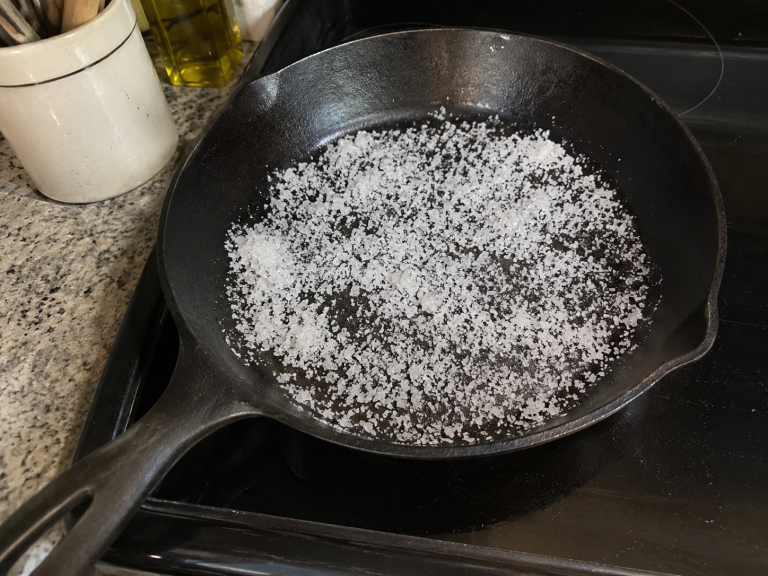
If you do not have steel wool in your cabinet, cut a raw potato in half, pour 2 tablespoons of coarse kosher salt onto the rusty spot in your dry skillet, and use the cut side of the potato like a scrubbing pad. The mild oxalic acid inside the potato combines with the abrasive salt to lift light surface rust in minutes without scratching surrounding seasoning.
How to Prevent Rust From Ever Coming Back
Once you restore a rusty skillet, keeping it rust-free takes almost zero effort:
-
- Never Air-Dry: Always hand-dry your pan with a towel and warm it on the stove for two minutes after washing.
- Keep a Micro-Layer of Oil: Wipe 2 drops of oil across the cooking surface after every wash, then buff it dry with a paper towel.
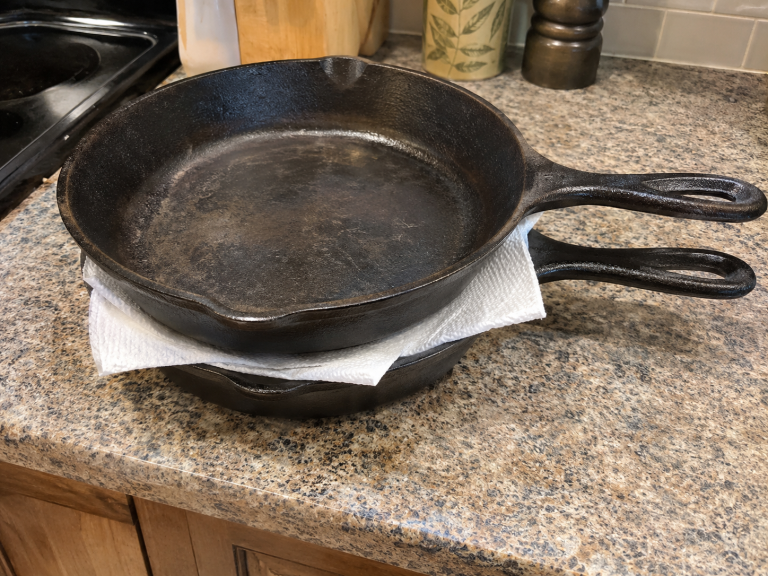
- Store in a Dry Spot: Avoid stacking wet lids or damp pots directly inside your cast iron skillet inside closed cabinets. If you live in a very humid climate, place a folded paper towel inside the skillet during storage to absorb stray moisture.