How to Fix Sticky or Blotchy Cast Iron Seasoning (Easy Step-by-Step Guide)
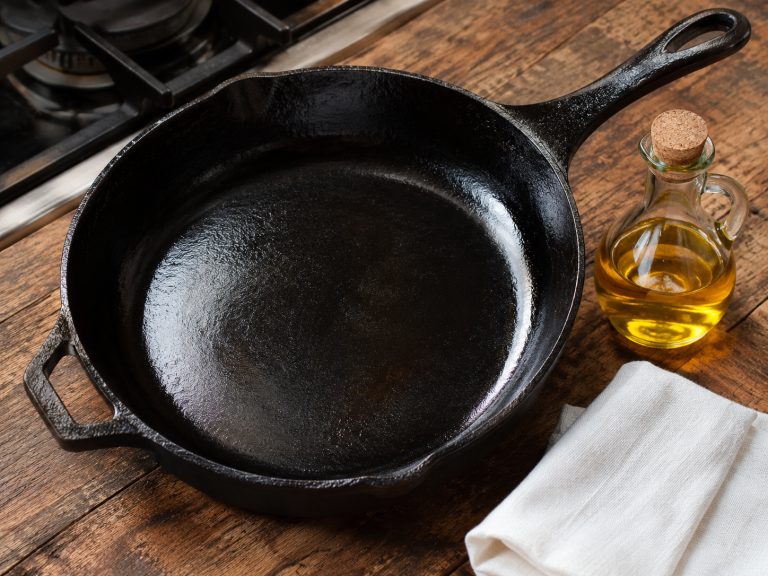
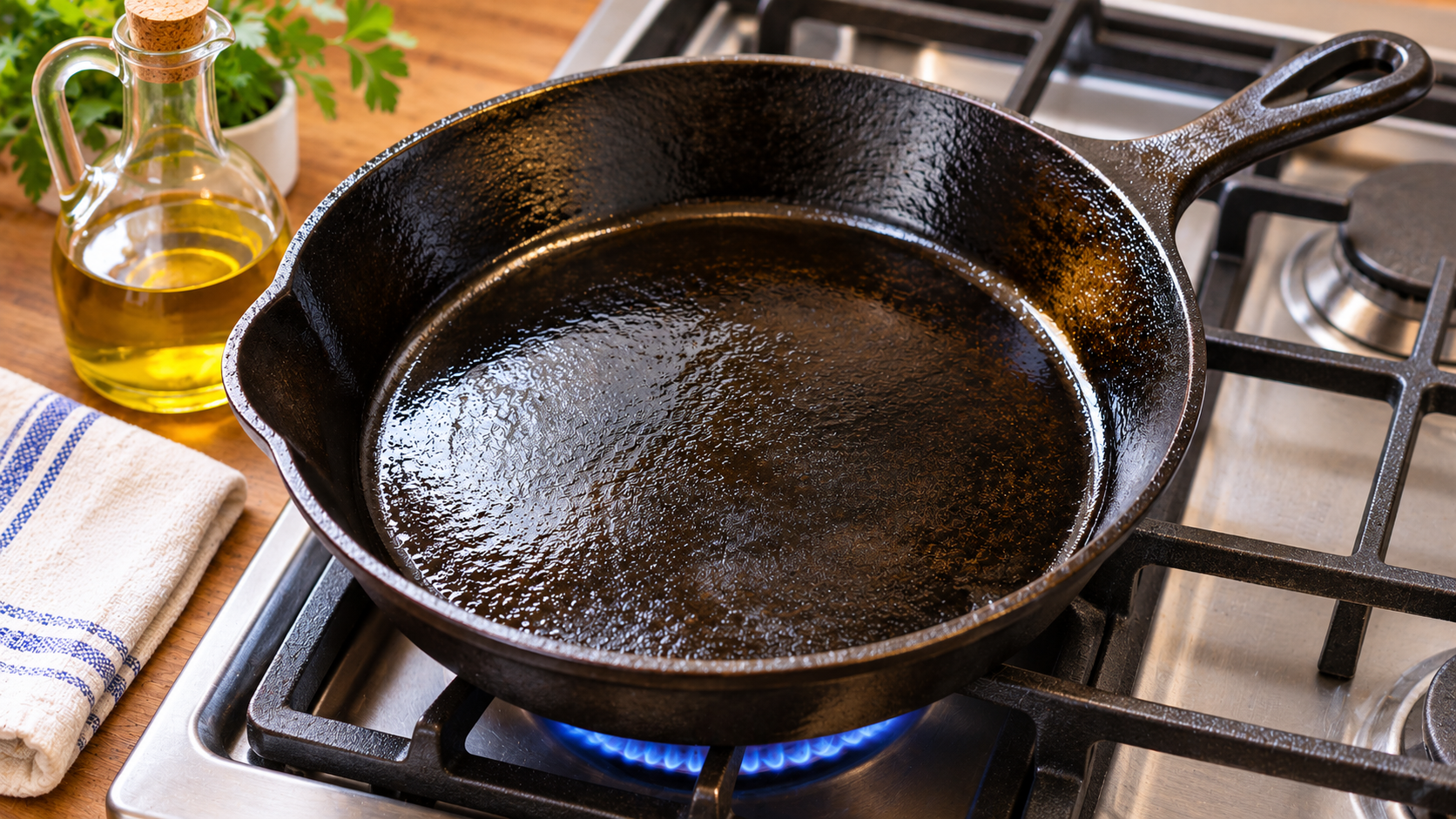
It is one of the most aggravating errors in cast iron care to remove a freshly seasoned cast iron skillet from the oven only to discover a leopard-spotted surface that is irregular, viscous, or tacky.
The good news is that viscous seasoning does not necessarily indicate that your pan is irreparable. In the majority of cases, there is no need to strip the pan to bare metal and begin anew. In a single oven cycle, the surface can be repaired by comprehending the reason for the oil’s failure to solidify.
The good news is that viscous seasoning does not necessarily indicate that your pan is irreparable. In the majority of cases, there is no need to strip the pan to bare metal and begin anew. In a single oven cycle, the surface can be repaired by comprehending the reason for the oil’s failure to solidify.
Why Cast Iron Seasoning Turns Sticky or Blotchy
Seasoning happens when a microscopic layer of cooking oil heats past its smoke point and chemically bonds to the iron (a process called polymerization). When that process goes wrong, one of three culprits is usually responsible:
-
- Too Much Oil Left on the Pan: This is the number-one cause. If even a thin visible film of liquid oil remains on the metal, the top of the oil dries into a gummy skin while the oil trapped underneath stays wet and tacky.
- Oven Temperature Was Too Low: If your oven was set below the oil’s smoke point (for example, baking grapeseed or canola oil at 350°F instead of 450°F), the oil partially oxidized into a sticky varnish instead of curing into hard carbon.
- Not Baking Long Enough: Pulling the pan out after 20 or 30 minutes cuts polymerization short before the oil fully hardens.
Method 1: The Re-Bake Fix (For Mildly Sticky or Spotted Pans)
If your skillet feels slightly tacky to the touch or has uneven glossy spots—but does not have thick, dripping puddles of wet oil—you can cure the existing layer simply by baking it properly without adding any new oil.
-
- Preheat Your Oven: Set your oven to 450°F (230°C) (or 475°F / 245°C if you used high-smoke-point avocado or sunflower oil).
- Do Not Add More Oil: Leave the skillet completely dry. Adding more oil right now will only make the stickiness worse.
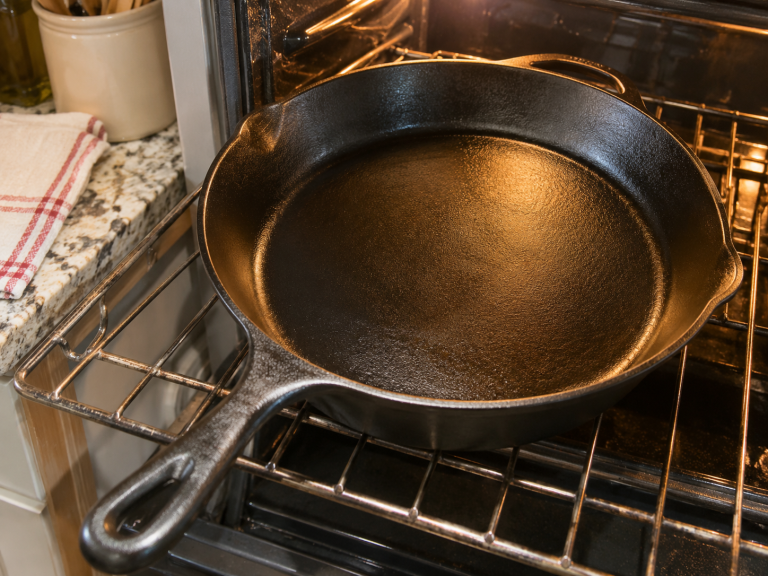
- Bake Upside Down: Place the skillet upside down on the middle oven rack so any excess oil cannot pool in the cooking surface. Place a sheet of aluminum foil on the rack below to catch drips.
- Bake for 60 Minutes: Let the pan bake at full temperature for a full hour so the uncured oil finishes polymerizing.
- Cool Inside the Oven: Turn off the heat and leave the oven door closed until the pan cools down completely. When you take it out, the sticky film should feel smooth, dry, and hard.
Method 2: Scrub and Re-Season (For Thick, Gummy Residue)
If your skillet has thick, rubbery ridges or dark gummy patches that dent when you press them with a fingernail, baking alone may leave uneven bumps. In that case, smooth out the high spots first:
-
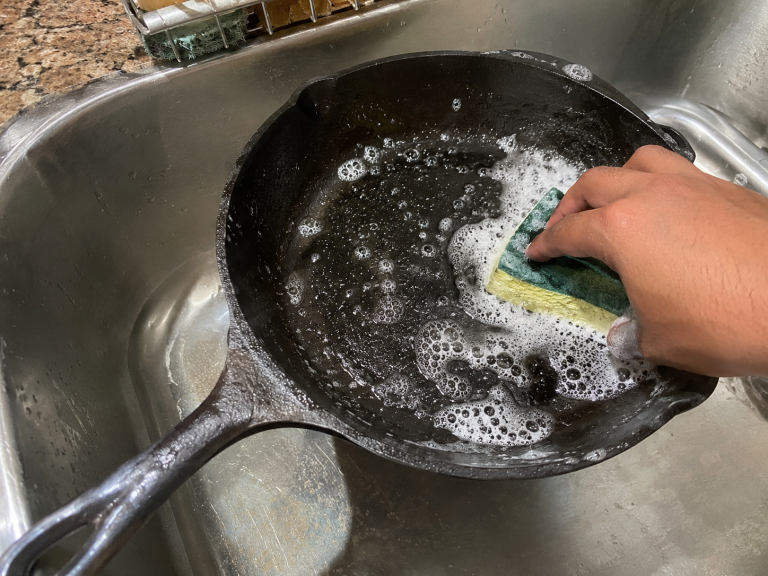
- Scrub the Sticky Patches: Wash the skillet with warm water, a small drop of mild dish soap, and a stiff nylon brush, chainmail scrubber, or non-scratch scouring pad to knock down the tacky buildup. (Don’t worry—soap will not harm intact seasoning underneath.)
- Dry Completely on the Stove: Towel-dry the pan, then place it over medium-low heat on your stove for 3 to 5 minutes until every trace of moisture evaporates.
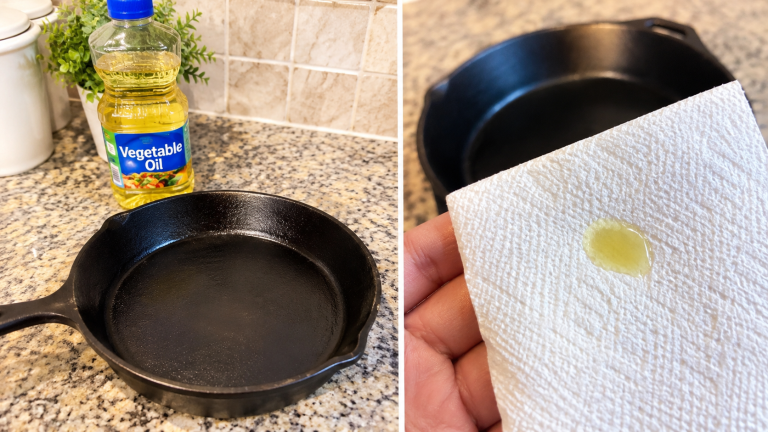
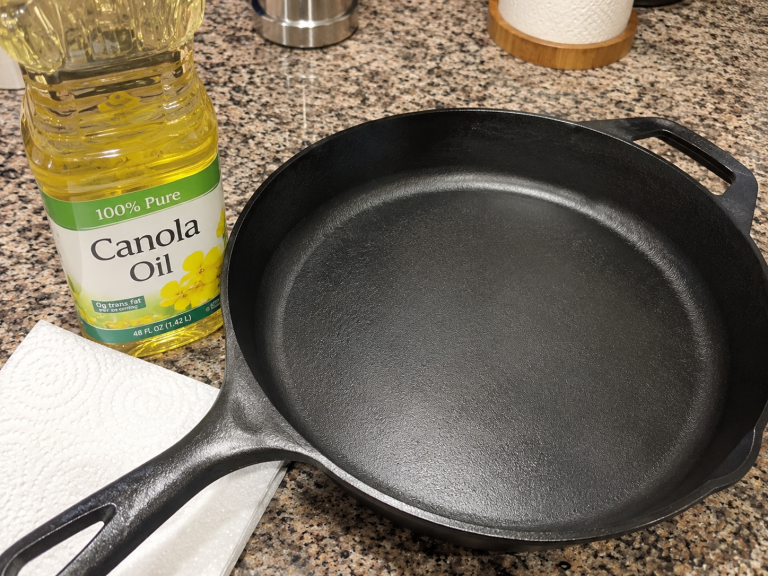
- Apply a Microscopic Coat of Oil: Rub 3 to 4 drops of canola, grapeseed, or sunflower oil across the entire skillet (inside, outside, and handle).
- Wipe Until Dry: Take a clean, lint-free cotton cloth or paper towel and wipe the pan thoroughly as if you accidentally spilled oil on it and want every drop off. The surface should look dull—not wet or shiny.
- Bake Upside Down for 1 Hour: Bake upside down at 450°F (230°C) for 60 minutes, then let it cool completely inside the turned-off oven.
How to Prevent Sticky Seasoning Next Time
| Mistake | What Happens | How to Avoid It |
|---|---|---|
| Pouring oil directly into the pan | Creates thick puddles that turn gummy | Put 3–4 drops onto a cloth first, then rub onto warm iron |
| Skipping the “dry wipe” step | Leaves wet streaks and leopard spots | Wipe with a second clean, dry towel before baking |
| Baking right-side up | Oil pools in the center of the skillet | Always place the skillet upside down on the oven rack |
| Baking at 350°F (175°C) | Oil turns into tacky varnish | Always bake at 450°F–475°F (230°C–245°C) |
Quick Troubleshooting FAQ
Can I just cook on a slightly sticky cast iron pan?
Yes. If the stickiness is very mild, cooking high-fat foods like sautéed onions, parathas, pancakes, or roasted vegetables over medium heat will gradually burn off and smooth out the uneven spots over a few uses.
Yes. If the stickiness is very mild, cooking high-fat foods like sautéed onions, parathas, pancakes, or roasted vegetables over medium heat will gradually burn off and smooth out the uneven spots over a few uses.
Why does my pan look spotted like a leopard after baking?
Leopard spotting happens when tiny droplets of excess oil bead up as the metal heats up. It is purely cosmetic and will darken into an even black patina as you cook with the pan.
Leopard spotting happens when tiny droplets of excess oil bead up as the metal heats up. It is purely cosmetic and will darken into an even black patina as you cook with the pan.