Can You Use Dish Soap on Cast Iron? (The Real Science Explained)
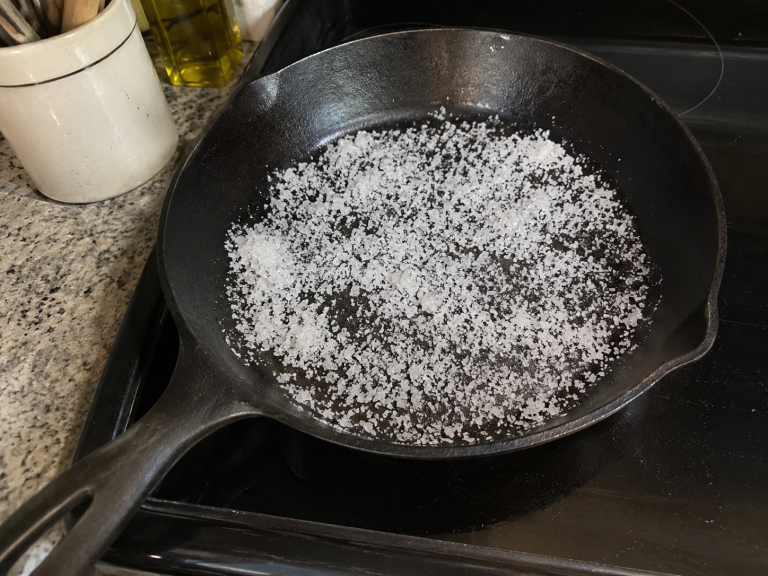
For my first two years of cooking with cast iron, I refused to let a single drop of dish soap touch my skillets. I scrubbed burnt garlic with hot water and salt alone until my pans smelled faintly like rancid fish oil and old bacon grease.
Once I tested washing a seasoned 10-inch skillet with mild liquid dish detergent 30 times in a row, the seasoning stayed completely intact—and my food stopped picking up yesterday’s dinner flavors. Here is why the “no soap” rule is outdated, what modern dish soap actually does to polymerized oil, and how to wash your skillet safely.
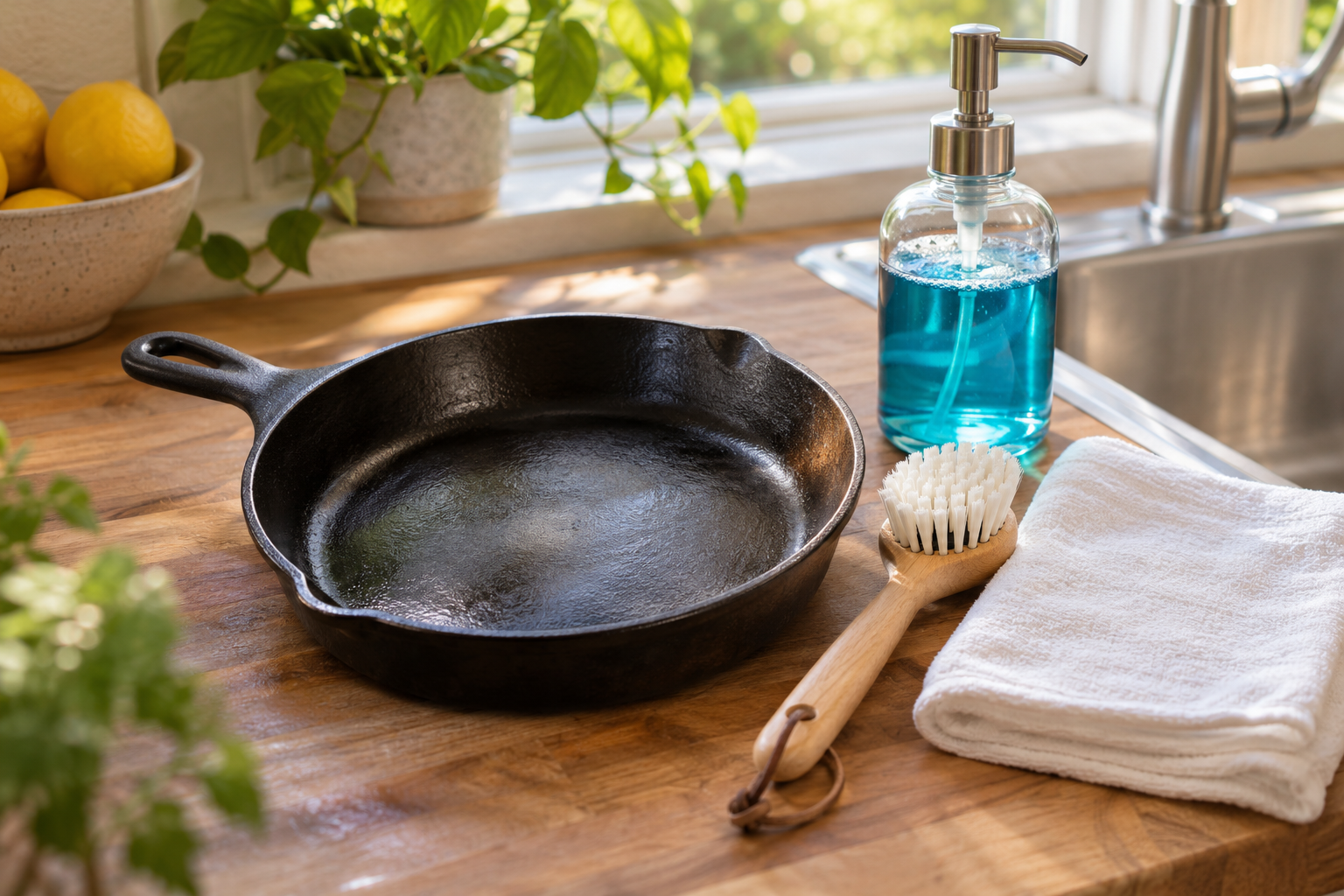
Quick Supply Checklist for Safe Cast Iron Washing
- Mild liquid dish soap (free of citrus degreasers, bleach, or lye—standard blue Dawn or mild plant-based detergent works great)
- Warm to hot tap water (105°F–120°F; never dump cold water into a blazing-hot pan)
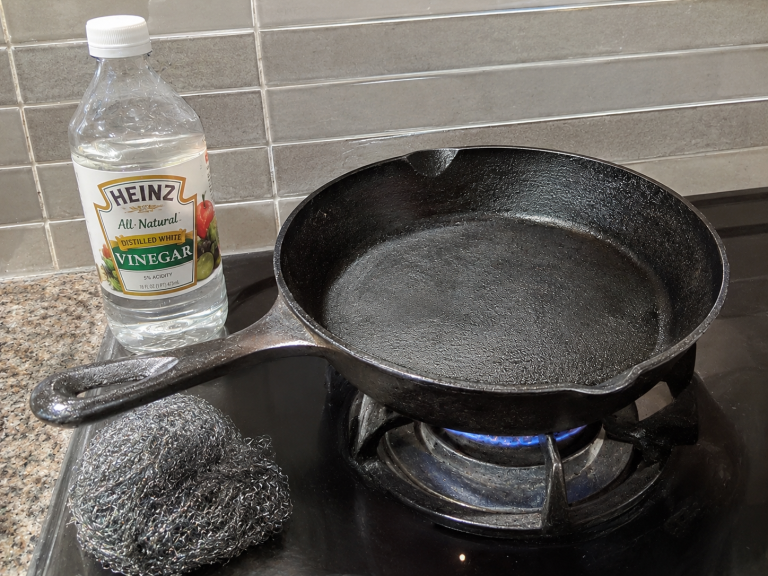
- Stiff nylon dish brush or stainless steel chainmail scrubber
- Two clean, lint-free cotton kitchen towels
- 1/4 teaspoon of refined canola or grapeseed oil for post-wash protection
Why the “No Soap on Cast Iron” Rule Started (And Why It’s Wrong Today)
The warning against washing cast iron with soap came from your great-grandmother’s kitchen, and back then, it was completely true. Until the mid-20th century, homemade and commercial soaps were made with lye (sodium hydroxide) and animal fat.
Lye is a caustic alkaline chemical strong enough to dissolve polymerized fats—in fact, restorers still use lye baths today to strip old thrift-store skillets down to bare gray metal.
Modern liquid dish detergents do not contain lye. Instead, they use gentle surfactants that grab onto loose, unbaked cooking grease and food particles so water can rinse them down the drain.
True cast iron seasoning is no longer wet oil—it is a hard, cross-linked plastic-like polymer baked onto the iron at 450°F+. A few drops of mild dish soap cannot dissolve that chemical bond any more than it can dissolve a plastic cutting board.
Step-by-Step: How to Wash Cast Iron With Dish Soap Safely
Using soap safely comes down to water temperature, gentle tools, and drying the pan right away. Follow this 4-minute cleanup routine after cooking sticky, smelly, or saucy meals.
Step 1: Let the Skillet Cool Down First
Wait 10 to 15 minutes after turning off the burner until the skillet feels warm—roughly 120°F to 140°F—rather than sizzling hot. Running cold or lukewarm sink water over a 450°F pan causes thermal shock, which can warp the cooking floor or crack the iron.
Step 2: Scrape Loose Bits With Hot Water
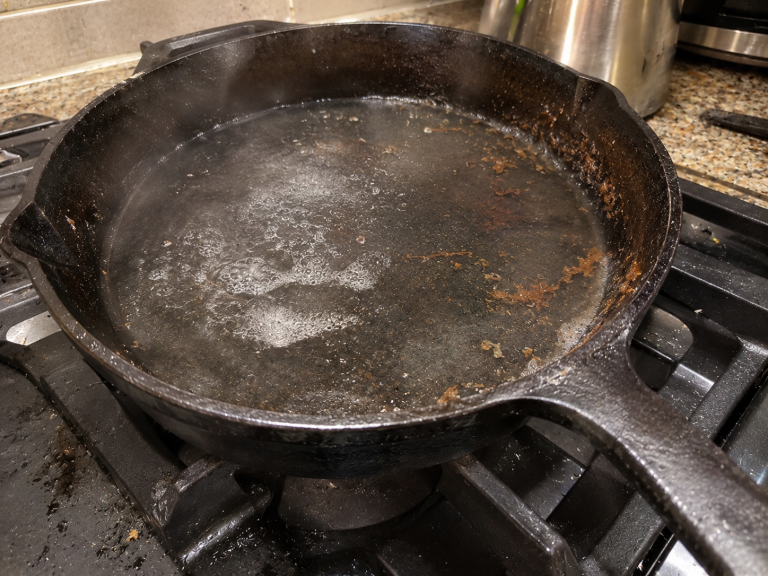
Hold the warm skillet under running hot tap water (110°F–120°F) and sweep away loose crumbs with a nylon brush or chainmail scrubber. If cheese or pan sauce is stuck tight, simmer 1/2 cup of water in the pan for 2 minutes first to loosen the crust.
Step 3: Scrub Lightly With 2 to 3 Drops of Dish Soap
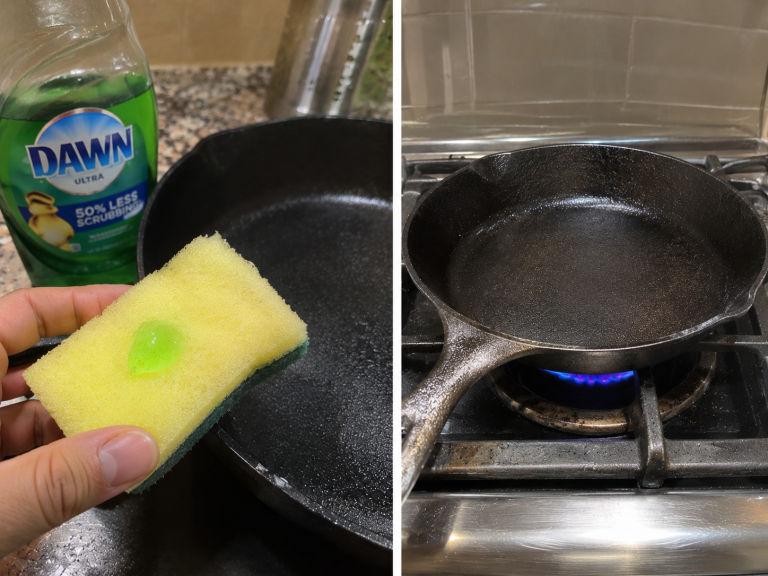
Squeeze 2 to 3 drops of mild dish soap onto your brush or sponge—do not pour a thick puddle straight into the pan. Scrub the cooking surface, sidewalls, and outer rim in gentle circles for 15 to 20 seconds until the greasy feel disappears and the water sheets smoothly instead of beading up on leftover fat.
Step 4: Rinse Thoroughly and Dry on the Burner
Rinse away all soap suds with hot water, then wipe the entire skillet—inside, handle, and bottom—with a cotton towel. Set the dry skillet over a low burner for 2 minutes until every trace of moisture evaporates from the metal pores.
Step 5: Wipe on a Microscopic Oil Film
While the pan is still warm from the burner, rub 1/4 teaspoon of grapeseed or canola oil across the cooking floor with a folded cloth, then buff it dry with a clean towel corner. Your skillet should look satin-matte, never wet or sticky.
What Goes Wrong in Real Life (And How to Fix It)
Scenario 1: The Pan Looks Dull and Chalky Gray After Washing
You scrub your skillet with soap and a green scouring pad, dry it on the stove, and notice the cooking floor looks flat, chalky gray instead of dark bronze-black. You did not ruin the pan—you either scrubbed off loose carbon buildup or used an abrasive green Scotch-Brite pad that scratched through fresh seasoning.
- The fix: Skip abrasive green pads and stick to nylon brushes or smooth-ring chainmail. Wipe 1/4 teaspoon of canola oil into the warm skillet, heat it on medium for 5 minutes until a faint wisp of smoke appears, and let it cool—the rich dark satin finish returns immediately.
Scenario 2: Orange Rust Spots Appear in the Cabinet the Next Morning
You washed the skillet with soap, towel-dried it quickly, and stacked it inside a closed cabinet. The next morning, faint orange dust rubs off onto your fingers along the cooking center or bottom rim.
- The fix: Soap removed the thin protective surface grease, and microscopic dampness stayed trapped in the iron pores because it skipped the 2-minute stovetop dry. Scrub the light orange rust with warm water, a drop of soap, and a nylon brush, dry it over a low burner for 3 minutes, and rub in a thin coat of oil while warm.
Common Mistakes I Made (And How to Avoid Them)
- Soaking a cast iron skillet in a soapy sink: Washing with soap for 20 seconds is harmless, but leaving cast iron submerged in soapy water for 30 minutes lets water sneak into tiny micro-pores and lift seasoning from underneath. Wash, rinse, and dry right away.
- Using heavy-duty citrus degreasers or dishwasher pods: Products labeled “industrial degreaser,” “oven cleaner,” or automatic dishwasher detergents contain harsh alkaline builders that actually strip seasoning. Stick to standard mild hand-washing dish liquid.
- Skipping the final oil wipe after a soapy wash: Dish soap strips away all loose surface oil down to the bare polymerized layer, leaving it slightly thirsty. Taking 10 seconds to wipe 1/4 teaspoon of oil onto the warm pan keeps it slick and rust-free.
- Using soap after every single meal: If you just toasted cornbread or fried bacon without burning anything, hot water and a wipe with a paper towel are plenty. Save dish soap for fish, garlic, sticky glazes, or after cooking slightly acidic foods.
Frequently Asked Questions
Will dish soap ruin brand-new factory pre-seasoned cast iron?
No. Factory pre-seasoning is baked on in industrial ovens at temperatures well above 500°F. Washing a brand-new skillet with 2 to 3 drops of mild dish soap before its first use is actually recommended to remove warehouse dust and shipping residue.
Why does my dish towel turn black after I wash my cast iron with soap?
That black residue is harmless carbonized food particles and microscopic iron-oil dust lifting from the pan’s textured surface, not your seasoning dissolving. Keep wiping with a dedicated dark kitchen towel until it comes away clean, then apply a thin oil wipe.
Can I put cast iron in the dishwasher if I turn off the heated dry?
Never put cast iron in a dishwasher. Dishwasher detergents contain strong alkaline chemicals and abrasives, and the long 60-minute hot steam cycle will strip your seasoning and cover the entire skillet in orange rust.
Which dish soap is safest for seasoned cast iron?
Any standard, mild liquid hand-dishwashing detergent—such as classic blue Dawn, Seventh Generation, or Ivory—works safely. Avoid soaps containing bleach, lye, lemon acid, or heavy industrial degreasers.