What Seasoning Actually Means
Many beginners think seasoning a cast iron pan means rubbing it with salt, pepper, and herbs. In cast iron care, seasoning has nothing to do with spices.
It is a simple chemical process called polymerization. When you coat raw iron in a microscopic layer of oil and bake it at a high temperature, the oil breaks down and bonds directly to the metal. This creates a hard, dark, plastic-like coating that protects the iron from moisture and gives you a slick cooking surface.
What You Will Need
Gather these basic items before you turn on your oven:
-
- A brand-new cast iron skillet
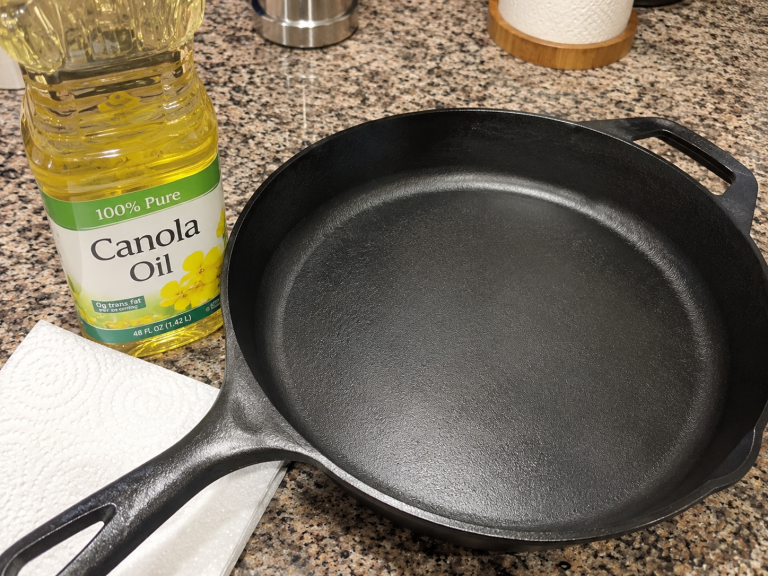
- High-smoke-point cooking oil (canola oil, vegetable oil, grapeseed oil, or Crisco shortening work best)
- Mild dish soap and a sponge (for the initial wash only)
- Lint-free cloths or sturdy paper towels
- Aluminum foil or a baking sheet (to catch any stray drips)
Step-by-Step Guide to Seasoning a New Skillet
Step 1: Wash and Dry the Skillet Thoroughly
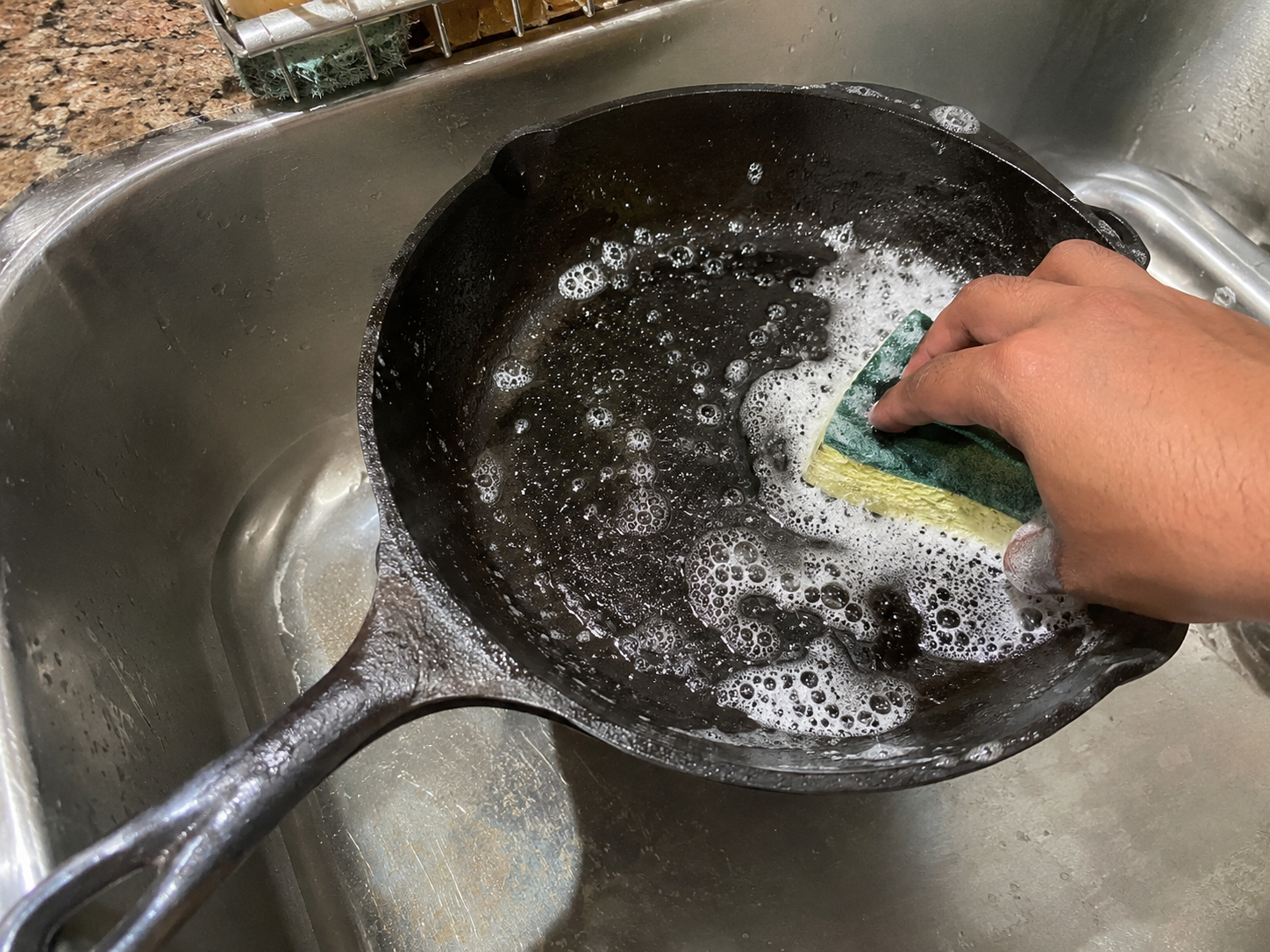
Even though you normally avoid heavy scrubbing on seasoned cast iron, a brand-new pan needs a good wash to remove factory dust and packaging residue. Scrub the inside, outside, and handle with warm water, a small drop of mild dish soap, and a sponge.
Rinse it well and dry it immediately with a towel. Do not let it air dry, as bare iron can start forming surface rust within minutes.
Step 2: Preheat Your Oven and Warm the Pan
Set your oven to 450°F (230°C). Place a sheet of aluminum foil or a large baking sheet on the bottom rack to catch any oil drips.
Put your clean, dry skillet on the middle rack for about 10 minutes while the oven heats up. Warming the pan opens up the microscopic pores in the iron, helping the oil bond much better. Carefully remove the warm pan using an oven mitt.
Step 3: Apply a Very Thin Layer of Oil
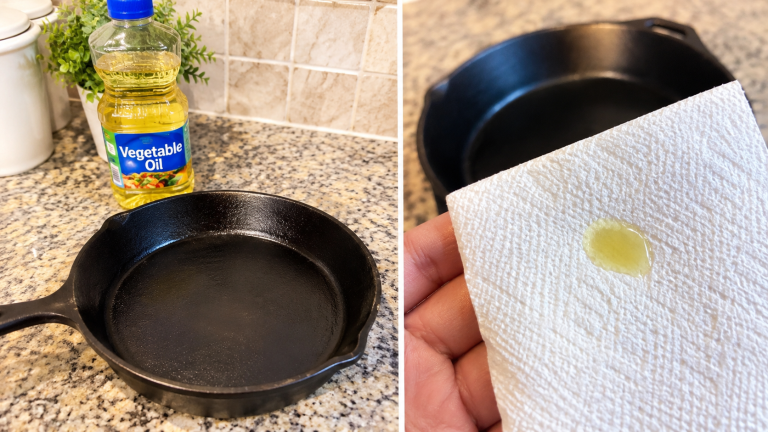
Pour about half a teaspoon of canola or grapeseed oil into the center of the warm skillet. Use a folded paper towel to spread the oil across the entire cooking surface, the sidewalls, the bottom, and the handle.
Every single inch of exposed iron needs a light coat so it does not rust.
Step 4: Wipe Off Almost All the Oil
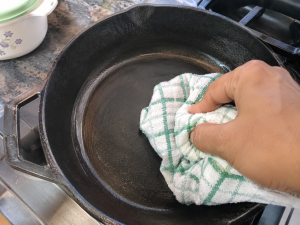
This is the most important step that beginners often miss. Take a fresh, dry paper towel and wipe the pan as if you made a mistake and are trying to remove all the oil.
If you leave too much oil on the surface, it will pool up and bake into a sticky, blotchy mess. The skillet should look completely dry with just a faint, satin shine.
Step 5: Bake the Skillet Upside Down
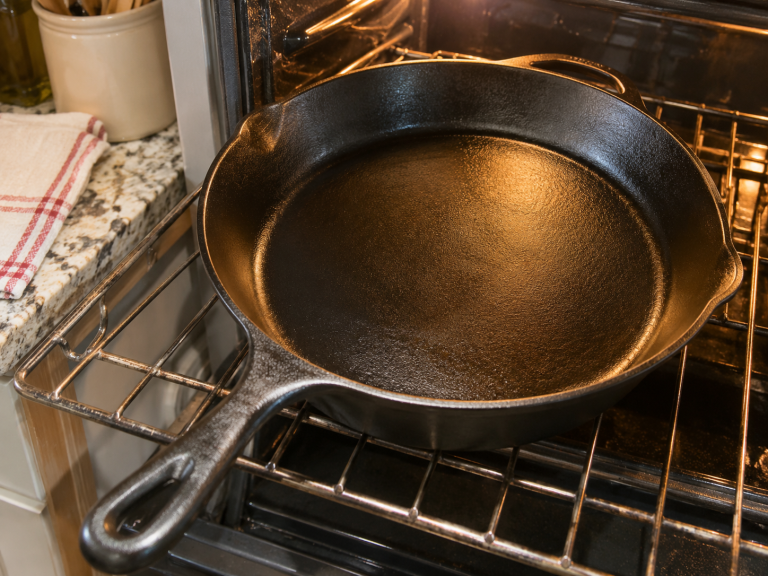
Place the skillet upside down on the middle rack of your 450°F oven. Putting it upside down ensures that any tiny excess oil drips onto the foil below rather than pooling inside the cooking surface.
Bake the skillet for 1 full hour. You may notice a faint oily smell in your kitchen, which is completely normal. Turn on your stove exhaust fan or crack a window if needed.
Step 6: Let It Cool Inside the Oven
After one hour, turn the oven off, do not open the door, and let the skillet cool down completely inside the oven. This usually takes about two hours. Slow cooling allows the newly formed seasoning layer to harden and cure properly without cracking.
How Many Layers Should You Do?
One round of oven seasoning is enough to protect a pre-seasoned skillet, but repeating Steps 3 through 6 two or three times will give you a noticeably slicker surface. Each thin layer builds on the last, turning the pan from a dull charcoal gray into a deep, glossy black.
Common Mistakes to Avoid
-
- Using Olive Oil or Butter: Low-smoke-point oils burn too quickly at 450°F, leaving behind carbon flakes instead of a smooth coating. Stick to canola, vegetable, or grapeseed oil.
- Leaving Heavy Oil Behind: Thick oil creates sticky spots that take months to cook off. Always wipe the pan dry before baking.
- Skipping the Handle and Bottom: Rust attacks the bottom of the pan just as easily as the inside, especially when resting on damp countertops.
How to Maintain Your New Seasoning
Once your skillet is seasoned, the best way to improve it is simply to cook with it. Start with foods rich in fat, like bacon, sautéed onions, cornbread, or roasted vegetables. Avoid cooking acidic foods like tomato sauce or vinegar for the first few weeks until the seasoning grows thicker.
After each meal, clean the warm pan with hot water and a stiff brush, dry it completely on the stove over low heat for two minutes, and wipe a tiny drop of oil over the surface before putting it away.