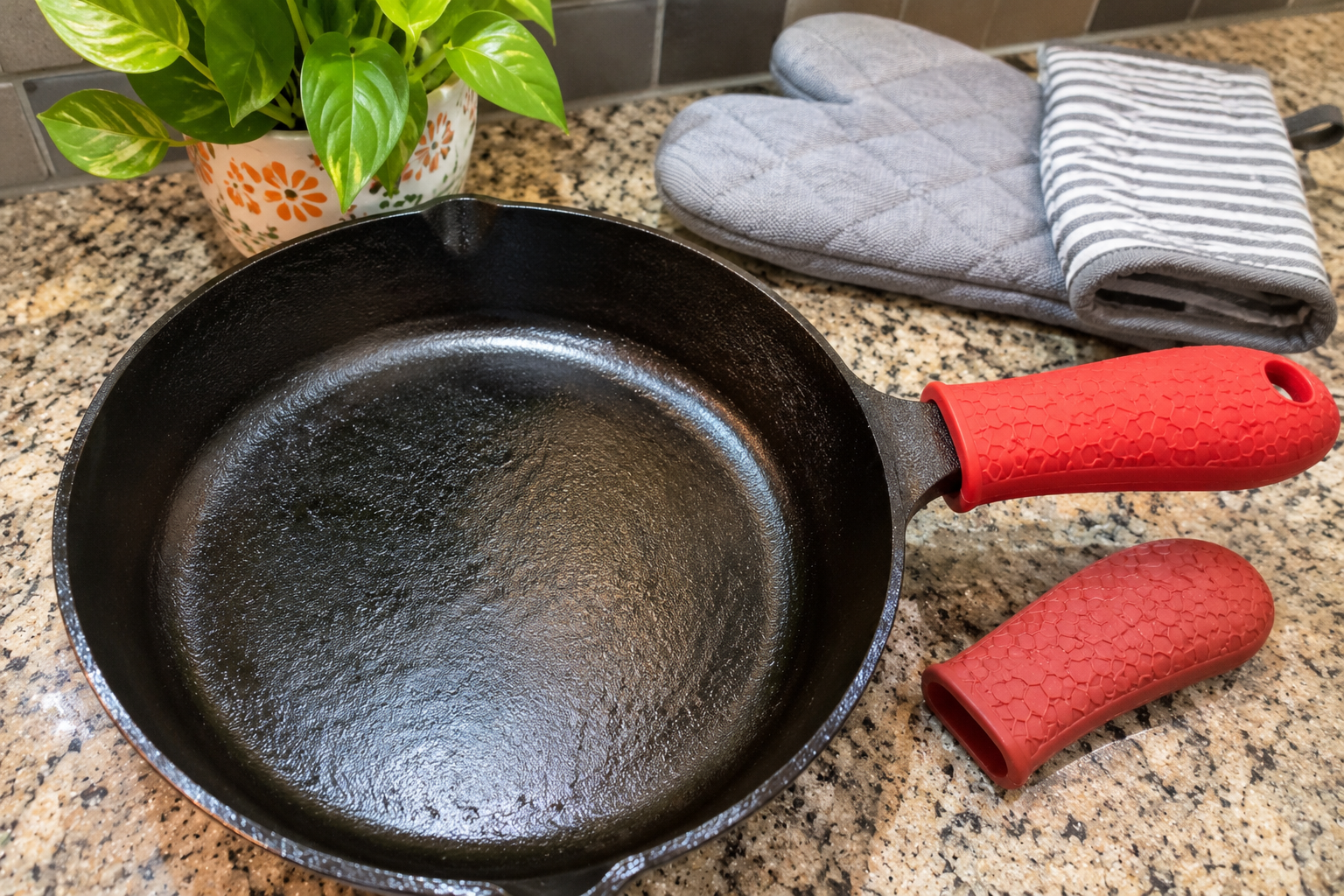
Best Ways to Handle a Hot Cast Iron Skillet Safely
Unlike modern stainless steel or non-stick pans that feature hollow, stay-cool plastic or rubber handles, a traditional cast iron skillet is cast from one solid piece of iron from rim to tip. That solid construction makes it virtually indestructible—but it also means the handle gets just as dangerously hot as the cooking surface itself.
Every seasoned home cook has experienced—or narrowly avoided—the reflex of grabbing a bare cast iron handle straight out of the oven or off a hot burner. Because iron holds onto extreme heat for twenty to thirty minutes after you turn off the stove, developing strict safety habits around hot cast iron protects your hands, your countertops, and everyone in your kitchen.
Why Cast Iron Handles Are Tricky to Handle
Understanding how heat moves through solid iron helps prevent accidental burns:
-
- Conducted Heat on the Stovetop: Even if you only heat the center of the pan over a small burner, heat slowly creeps up the sidewalls and travels all the way down the handle. After ten minutes of cooking, a bare handle can easily reach 300°F to 400°F (150°C to 200°C).
- Uniform Heat From the Oven: When you bake cornbread, roast chicken, or season your skillet inside a 450°F oven, the entire handle is blazing hot. Even worse, a pan pulled out of the oven looks identical to a cool pan sitting on the counter—making it easy to grab by mistake ten minutes later.
- Heavy Weight and Leverage: A 12-inch cast iron skillet weighs around eight pounds empty—and over twelve pounds full of food and hot oil. Lifting that weight with one hand puts intense strain on your wrist and increases the risk of spilling hot grease.
The 5 Best Tools for Handling Hot Cast Iron Safely
Never rely on bare hands or thin, damp dish towels. Keep these reliable tools right beside your stove:
1. Thick Silicone Handle Covers
Slip-on silicone hot handle holders are designed specifically to slide over standard teardrop-shaped cast iron handles. They stay cool to the touch during stovetop cooking, offer a firm non-slip grip, and handle temperatures up to 450°F to 500°F.
Important Safety Rule: Never leave a silicone handle cover on your skillet inside the oven, and remove it before putting the pan under a broiler. If left inside a hot oven, the silicone itself heats up to 450°F and will burn your hand just like bare metal.
2. Heavy-Duty Quilted Oven Mitts (High-Heat Rated)
When transferring a heavy skillet in and out of a hot oven, use thick, quilted cotton oven mitts lined with heat-resistant material (or aramid/silicone-coated mitts). Make sure the mitts fit snugly enough that your fingers do not slip when gripping a heavy handle.
3. Leather Skillet Handle Sleeves
Thick suede or full-grain leather handle covers are a favorite among cast iron collectors. Leather does not melt, provides an ultra-secure grip when lifting heavy pans, and molds to the exact shape of your skillet’s handle over time. Like silicone covers, slide leather sleeves on only when you are ready to lift the pan—do not bake them inside the oven.
4. Folding Pot Holders (Only When Completely Dry)
Thick, woven cotton pot holders work well for quick stovetop adjustments, provided they are 100% dry. Never grab a hot cast iron handle with a wet or damp kitchen towel or pot holder. Water conducts heat instantly, turning moisture inside the cloth into scalding steam that burns your palm in a split second.
5. Always Use Two Hands (The Helper Handle Rule)
Most 10-inch and 12-inch cast iron skillets feature a small curved loop on the opposite side of the main handle called a helper handle. Whenever you lift a full or hot skillet off the burner or out of the oven, wear oven mitts on both hands—grip the main handle with your dominant hand and support the helper handle with your other hand.
4 Kitchen Safety Habits Every Cast Iron Cook Needs
Beyond using the right mitts, these four habits prevent the most common kitchen accidents:
1. Leave a Visual Reminder on Hot Handles
When you pull a cast iron skillet out of the oven and set it on top of your stove to cool, drape a dry dish towel or oven mitt directly over the bare handle (as long as all stovetop burners are turned off). That towel serves as an unmistakable visual warning to yourself and family members that the handle is scorching hot.
2. Turn Handles Inward Over the Counter
While cooking on the stove, always angle your skillet’s long handle inward over the countertop—never sticking out over the edge of the stove where someone walking past could bump into it, and never hanging over another lit burner.
3. Use Thick Trivets on Countertops and Tables
A hot cast iron skillet will scorch laminate countertops, crack granite or quartz with thermal shock, and ruin wooden dining tables. Before pulling your pan off the heat, set a thick cork trivet, wooden cutting board, or silicone hot pad on your counter so you have a safe landing spot ready immediately.
4. Keep Children and Pets Away During Cooling
Because thick iron retains dangerous heat for up to 30 minutes after cooking finishes, keep hot skillets pushed toward the back burners of your stove—well out of reach of curious kids and jumping pets—until the pan cools completely to room temperature.
Frequently Asked Questions
Can I leave a silicone handle cover on my skillet while cooking on a gas stove?
Yes, as long as the gas flame stays centered underneath the bottom of the skillet and does not lick up the sides toward the handle. If you are searing over high flames on a gas range, it is safer to keep the handle bare while cooking and slip the silicone cover on only when you need to lift or move the pan.
What should I do if I accidentally touch a hot cast iron handle?
Immediately run your burned hand or fingers under cool (not ice-cold) running tap water for 10 to 15 minutes to pull heat out of the skin and reduce blistering. Avoid putting butter, oil, or ice directly on a burn, and seek medical care if a burn blisters deeply or covers a large area.