Why You Should Avoid Cooking Tomatoes in New Cast Iron
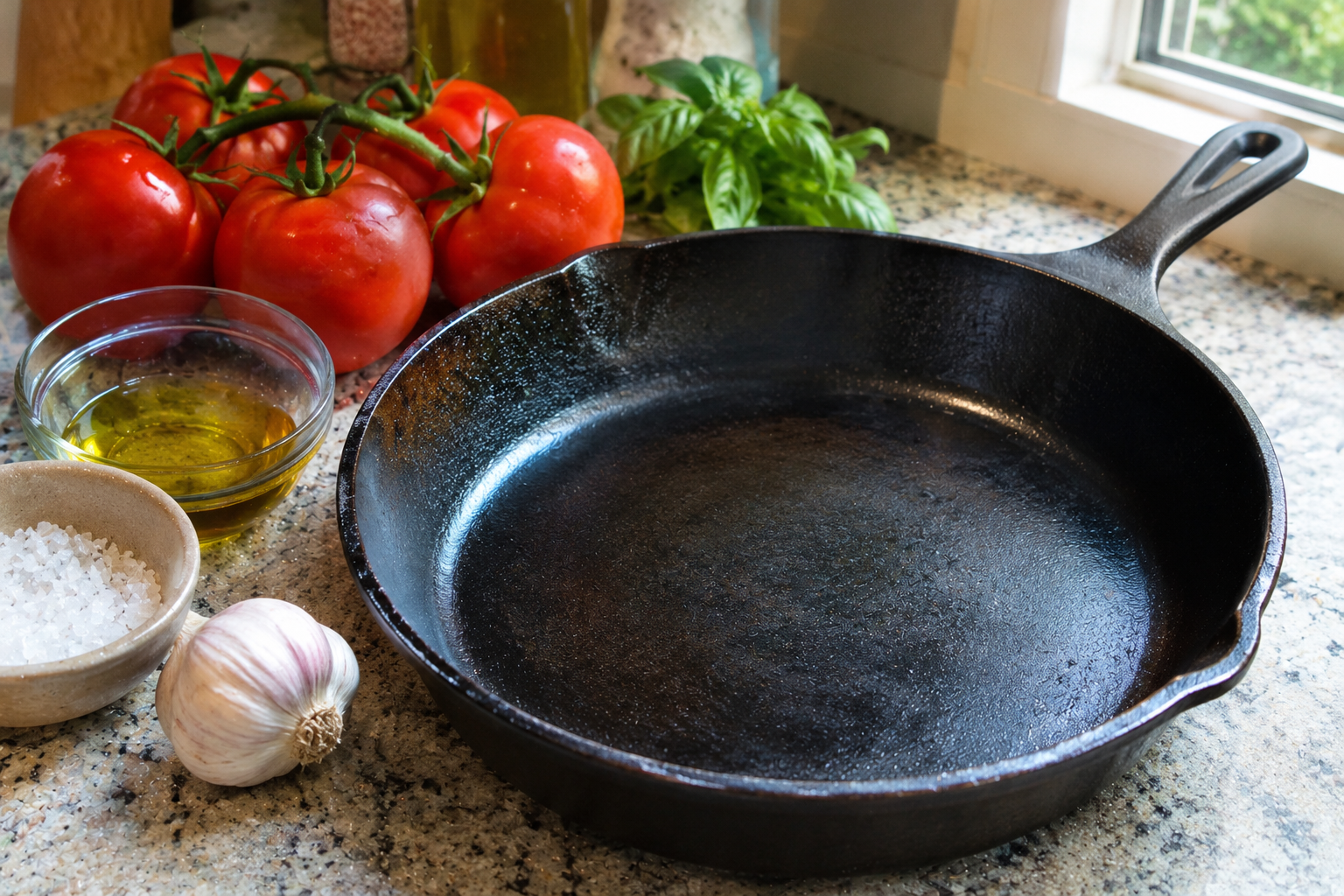
If you just bought a brand-new cast iron skillet—or spent your Saturday afternoon carefully seasoning an old pan—you might be tempted to break it in with a rich Sunday marinara sauce, a batch of chili, or shakshuka. While cast iron is famous for handling almost any recipe, simmering tomatoes and other acidic ingredients in a newly seasoned skillet is one of the fastest ways to strip your hard-earned non-stick coating.
Understanding how acids interact with raw iron and fresh seasoning will save you from dull gray patches, flaking black specks in your sauce, and frustrating re-seasoning sessions. Even better, once your skillet builds up a few months of solid cooking layers, you can enjoy quick tomato dishes safely without harming your pan.
What Happens When Acid Meets New Cast Iron?
Seasoning is made of cooking oil that has been baked past its smoke point until it polymerizes into a thin, protective shell over raw iron. On a brand-new skillet—even one labeled “pre-seasoned” from the factory—that protective barrier is still thin, microscopic, and porous.
When you pour crushed tomatoes, tomato paste, lemon juice, vinegar, or wine into a hot skillet:
-
- Acid Eats Through Thin Seasoning: High-acid ingredients chemically break down young, thin layers of polymerized oil, dissolving the coating right off the metal.
- Bare Iron Reacts With the Food: Once the acid punches through the seasoning, it touches the raw gray iron underneath. This chemical reaction pulls tiny trace amounts of iron into your food, which often gives light-colored tomato sauces a dark tint and a noticeable metallic flavor.
- Flash Rust Forms Immediately: Because the protective oil barrier is gone, the exposed dull gray patches inside your pan will start turning orange with surface rust the moment you rinse the skillet in the sink.
Which Acidic Foods Should You Avoid at First?
Tomatoes get most of the blame, but several common pantry ingredients have high acidity levels that can damage new seasoning during long simmers:
-
- Tomatoes and Tomato Sauces: Canned crushed tomatoes, marinara, salsa, ketchup, and tomato paste.
- Citrus Juices: Fresh lemon juice, lime juice, orange juice, and grapefruit marinades.
- Vinegars: Apple cider vinegar, balsamic vinegar, white vinegar, and vinegar-based barbecue sauces.
- Wine and Beer: Red or white wine pan reductions and beer-braised meats simmered for hours.
- Pickled Ingredients: Sauerkraut, pickles, capers, and brine liquids.
When Is It Safe to Cook Tomatoes in Cast Iron?
You do not have to ban tomatoes from your cast iron skillet forever. The rule applies strictly to new or freshly stripped pans and long, slow simmers.
1. Wait Until Your Seasoning Is Well-Established
Cook fatty, non-acidic foods in your new skillet for at least 3 to 4 weeks (roughly 10 to 15 meals) before introducing tomatoes. Cooking bacon, cornbread, sautéed onions, roasted potatoes, and seared meats builds up dozens of overlapping, rock-solid layers of seasoning that resist acid far better than a single oven coat.
2. Keep Simmer Times Under 20 Minutes
Even on a well-seasoned, five-year-old skillet, simmering acidic tomato sauce for three hours will eventually wear down the surface. Quick recipes—like slicing fresh tomatoes onto a burger, making a 15-minute pan sauce, or searing cherry tomatoes for a quick pasta toss—are completely fine once your pan has a deep, glossy black finish.
3. Never Store Leftover Tomato Sauce Inside the Skillet
If you cook a tomato dish in cast iron, transfer the leftovers into a glass or plastic container as soon as dinner is served. Leaving acidic food sitting inside the pan overnight while it cools in the fridge will eat straight down to bare silver iron by morning.
How to Protect and Recover Your Skillet After Cooking Tomatoes
If you already simmered a batch of chili or marinara in your skillet and noticed the inside looks dull, patchy, or gray instead of shiny black, do not worry—your pan is easy to fix in five minutes:
-
- Step 1: Wash and Dry Immediately. Rinse the skillet with hot water and a soft nylon brush right after serving. Dry it completely with a kitchen towel, then warm it on a low stove burner for 2 to 3 minutes until bone-dry.
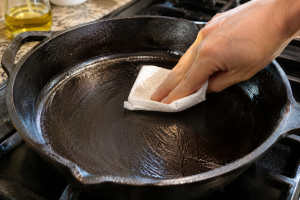
- Step 2: Apply a Quick Stovetop Oil Touch-Up. While the pan is still warm, turn off the burner and wipe 3 or 4 drops of canola or grapeseed oil across the dull gray areas using a folded paper towel. Buff off any excess shine with a dry corner of the towel.
- Step 3: Cook Something Fatty Next. For your next meal, fry up a few strips of bacon, sauté onions in butter, or bake a batch of cornbread. Natural cooking fats immediately rebuild and darken the worn spots.
(Tip: If you love making long-simmered spaghetti sauce, Sunday ragu, or spicy chili every week, consider keeping an enameled cast iron Dutch oven—like Lodge or Le Creuset—in your kitchen alongside your bare cast iron skillet. The smooth glass enamel coating is 100% immune to acids).
Frequently Asked Questions
Is it dangerous to eat food cooked in cast iron if the tomato sauce turns slightly dark?
No. A slight dark tint or faint metallic taste comes from harmless dietary iron leaching out of the pan into the acidic sauce. In fact, cooking in cast iron actually increases the natural iron content of your food slightly. However, too much iron makes sauces taste harsh, so it is best to save long tomato simmers for well-seasoned pans or stainless steel pots.
Can I deglaze my cast iron skillet with wine or lemon juice?
Yes, as long as your skillet already has a solid base of seasoning and you only splash in a small amount of wine or lemon juice for 1 to 2 minutes to scrape up browned bits for a quick pan sauce. Just wash, heat-dry, and wipe the skillet with a drop of oil right after dinner.