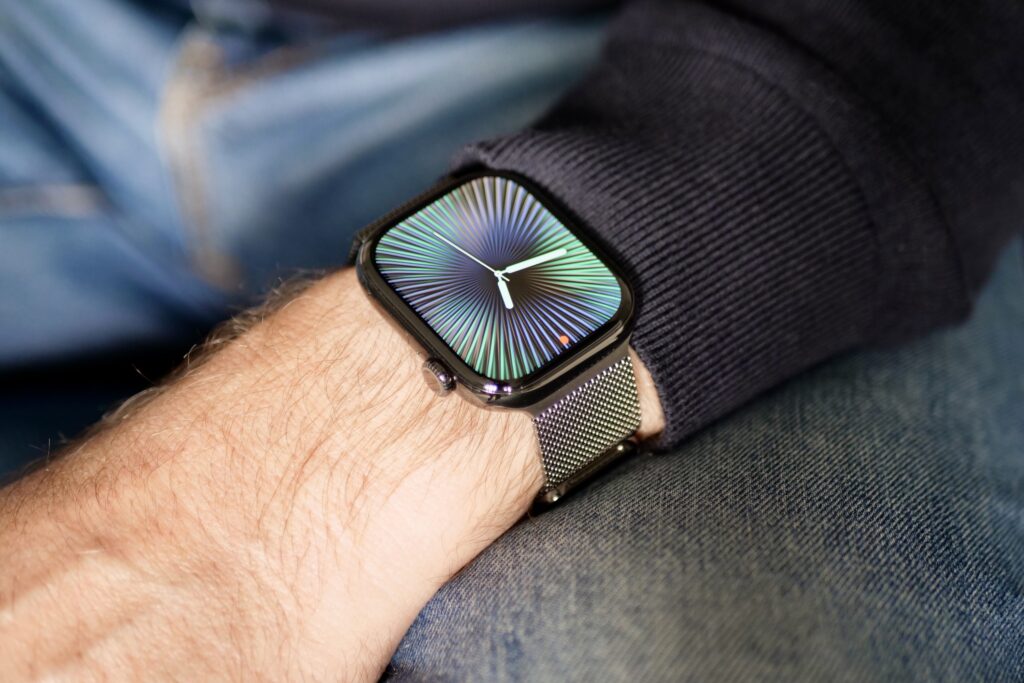
Apple’s Series 11 launched in 2026 as an iterative update rather than a redesign, and that’s exactly the point. Instead of chasing a new look, Apple used this generation to fix long-standing complaints — battery life, screen durability, and connectivity — while layering in new health features through watchOS 26. Starting at $399, it’s not cheap, but multiple independent test labs have named it the best overall smartwatch for iPhone owners in 2026.
This review looks at what’s genuinely new, who should buy it, and who can safely skip this generation.
Testing methodology note: This review draws on hands-on, long-term testing published by established outlets — Tom’s Guide, Wareable, and the5krunner — cross-checked against Apple’s official specifications, so the details below reflect real-world use rather than marketing claims alone.
Quick Verdict
The Apple Watch Series 11 is the most well-rounded smartwatch Apple has made, and reviewers consistently rank it as <cite index=”16-1″>the best overall smartwatch for most people, delivering a blend of style, tracking accuracy, and smart features.</cite> The standout upgrade is battery life, which finally crosses the one-day threshold reviewers have complained about for years. But if you already own a Series 10, this is a smaller jump than past generations — the case design, chip, and display are essentially unchanged.
What’s Actually New
Apple didn’t touch the exterior design this year. The Series 11 keeps the same thin profile, 42mm/46mm case options, and large OLED display introduced with the Series 10. The changes that matter are under the hood and in software:
- Battery life: This is the headline fix. According to testing from Tom’s Guide, <cite index=”19-1″>the newer watch now has 24 hours of battery life, which is an improvement on its predecessor’s 18 hours.</cite> That’s a genuinely meaningful jump for a device that has historically struggled to comfortably last a full day with sleep tracking enabled.
- Display durability: Apple switched to a new Ion-X glass on the aluminum models that is twice as scratch-resistant as before — a practical improvement for a device that spends all day exposed on your wrist.
- Connectivity: The Series 11 moves from LTE to 5G on cellular models, improving data speeds when you’re away from your phone.
- Health software: Running on watchOS 26, the Series 11 introduces passive hypertension notifications and a native Sleep Score, both powered by the existing S10 chip rather than new hardware.
Should Series 10 Owners Upgrade?

Short answer: probably not. Reviewers are aligned that the Series 11 is a refinement rather than a leap. One detailed comparison from Wareable put it plainly, noting <cite index=”18-1″>the Series 10 offers a virtually identical experience — it has the same thin case, large 42/46mm display, and the same chip</cite> as the newer model. If you bought a Series 10 recently, the extra battery life and scratch resistance are nice, but they’re not compelling enough on their own to justify replacing a watch that’s barely a year old.
Where the upgrade makes more sense is for anyone coming from a Series 8 or earlier, where the combined improvements in battery life, display size, and health tracking add up to a much bigger real-world difference.
Health and Fitness Tracking
The Series 11 supports the same comprehensive health tracking suite found across Apple’s current lineup: heart rate monitoring, ECG, blood oxygen tracking, workout detection across dozens of activity types, and Apple’s Activity Rings system for motivation. The new Sleep Score feature adds a single, easy-to-read number summarizing sleep quality — a feature Apple was relatively late to add compared to competitors like Garmin and Samsung, both of which have offered similar scoring systems for several years.
The new passive hypertension notifications are a notable first for Apple Watch, flagging signs consistent with high blood pressure over time. It’s worth noting this is a wellness notification, not a diagnostic tool, and Apple is explicit that it doesn’t replace a blood pressure cuff or a doctor’s assessment.
How It Compares to the Rest of the Lineup
Apple currently sells three distinct tiers, and choosing between them comes down to budget and use case rather than which one is “best”:
| Model | Best For | Battery Life | Starting Price |
|---|---|---|---|
| Apple Watch SE 3 | Budget buyers | ~18 hrs | ~$249 |
| Apple Watch Series 11 | Most people | 24 hrs | $399 |
| Apple Watch Ultra 3 | Endurance athletes | Up to 72 hrs (low power) | ~$799 |
For serious athletes, the Ultra 3 remains the outlier: its titanium case, sapphire lens, and endurance-focused battery life make it the only model in the lineup built for multi-day adventures or long-distance races. But for the vast majority of iPhone owners who want a daily driver that tracks fitness, handles notifications, and doesn’t require charging every single night, the Series 11 is the one reviewers keep pointing to as the sensible default.
Who Should Buy the Series 11

Buy it if:
- You’re upgrading from a Series 9 or older
- All-day battery life without daily anxiety is a priority
- You want Apple’s latest health features (Sleep Score, hypertension alerts)
- You use an iPhone and want the deepest ecosystem integration
Skip it if:
- You already own a Series 10 — the differences are incremental
- You’re a serious endurance athlete who needs multi-day battery life (look at the Ultra 3 instead)
- You’re on a tight budget (the SE 3 covers most core health features for $150 less)
- You use an Android phone — Apple Watch requires an iPhone to function
Final Take
The Apple Watch Series 11 doesn’t try to reinvent what a smartwatch is — it takes the design Apple settled on with the Series 10 and quietly fixes its biggest weakness. A jump from 18 to 24 hours of battery life sounds modest on paper, but for a device you’re expected to wear and charge daily, it meaningfully changes the experience of owning one. Combined with a tougher display and Apple’s most capable health-tracking software yet, it’s easy to see why independent reviewers continue to rank it as the best smartwatch for most people in 2026 — even if, for existing Series 10 owners, it’s a generation worth skipping.
Sources referenced: Tom’s Guide smartwatch testing, Wareable Apple Watch buying guide, the5krunner Apple Watch comparison. Prices and specifications are accurate as of publication and may change; check Apple’s official site or retailer listings for current pricing.

Leave a Reply