How to Remove Stuck-On Burnt Food from Cast Iron Easily
Even seasoned cooks occasionally get distracted while searing steaks, caramelizing onions, or baking cornbread, leaving behind a stubborn layer of burnt, crusty food welded to the bottom of their cast iron skillet. On a regular stainless steel pan, you would simply fill the sink with soapy water and leave it to soak overnight. On cast iron, however, soaking ruins your seasoning and invites orange rust.
Fortunately, you do not have to ruin your pan or wear out your wrists scraping at burnt-on messes. Because cast iron holds heat so well, you can use water, steam, and simple pantry staples to lift charred food right off the metal in under five minutes—leaving your hard-earned seasoning completely intact.
Why Burnt Food Sticks to Cast Iron
Before scrubbing away a mess, it helps to know why food stuck in the first place so it happens less often:
-
- Skipping the Preheat: Dropping cold meat or eggs onto a cold iron pan lets proteins bond directly to the metal pores before a sear can form.
- Flipping Too Soon: Steak, chicken, and fish naturally release from hot cast iron once a golden crust forms. Pulling food early tears it in half and leaves stuck bits behind.
- Sugary Sauces and Marinades: Barbecue sauce, honey, and brown sugar burn quickly at high temperatures and bake onto the pan like hard candy.
4 Safe Ways to Remove Burnt Food (From Light to Heavy Messes)
Start with the gentlest method first and move down the list only if the burnt crust refuses to budge.
Method 1: The Stovetop Boil (Best for Thick, Crusty, or Sugary Messes)
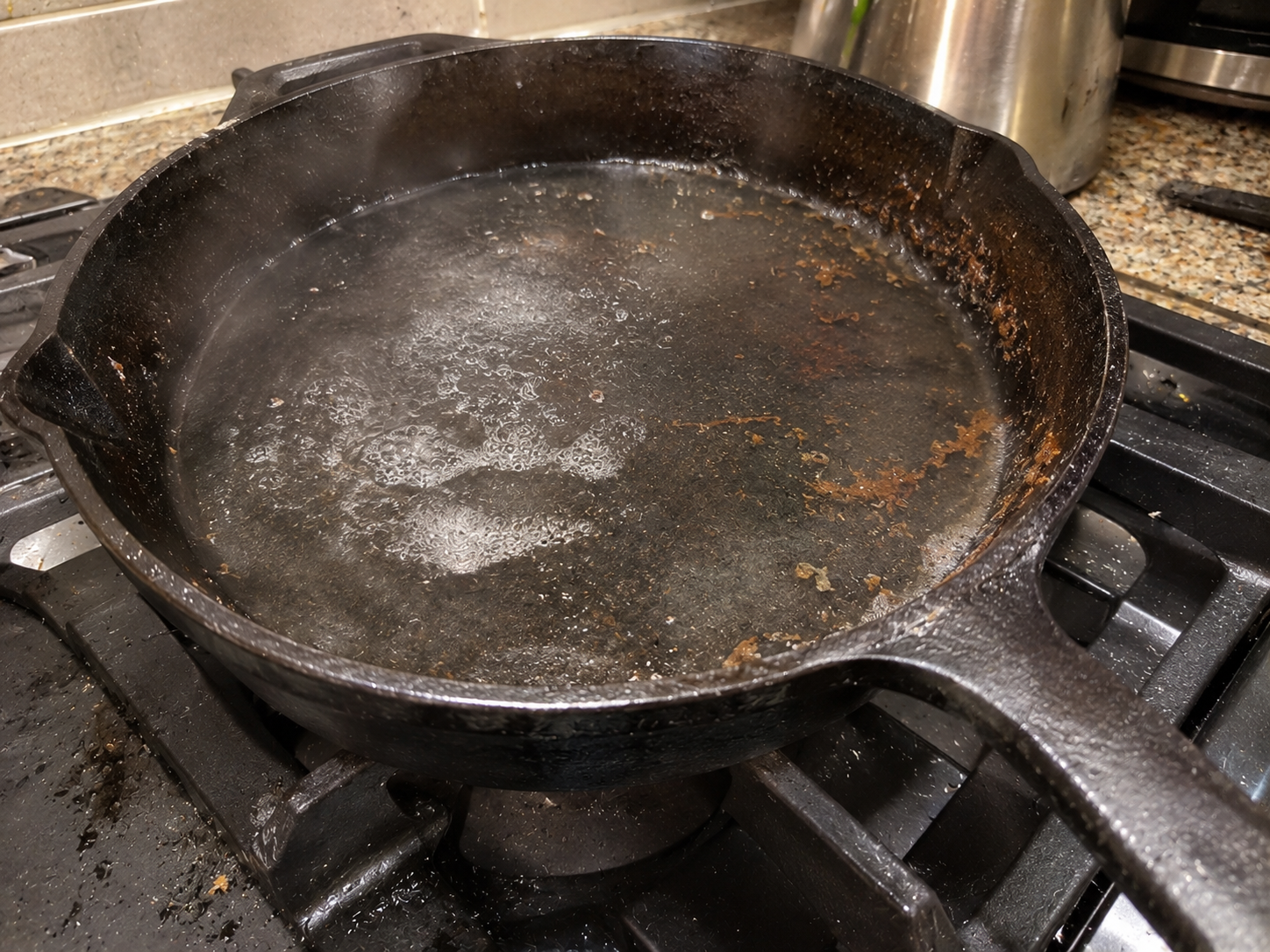
If burnt sauce, melted cheese, or seared meat is baked hard onto the skillet, boiling a shallow layer of water loosens it effortlessly without harsh scraping.
-
- Step 1: Let the pan cool slightly. Never pour water into a smoking-hot skillet, as sudden temperature shock can crack or warp the iron. Wait 3 to 5 minutes until the pan is warm, not scorching.
- Step 2: Add half an inch of warm water. Pour enough warm tap water into the skillet to cover the burnt spots completely.
- Step 3: Simmer for 3 to 5 minutes. Place the skillet back on your stove over medium heat and bring the water to a gentle simmer.
- Step 4: Scrape gently with a wooden spoon. As the water bubbles, use a flat-edged wooden spatula or nylon pan scraper to nudge the softened food bits loose. Within two minutes, the burnt crust will lift right off the iron.
- Step 5: Rinse, dry, and oil. Pour out the dirty water, rinse the pan with hot tap water, wipe it dry with a towel, warm it on a low burner for two minutes, and wipe 2 drops of cooking oil across the surface.
Method 2: Coarse Kosher Salt Scrub (Best for Sticky or Greasy Residue)
When food is stuck in a thin, gummy layer rather than a thick crust, coarse salt works like tiny, safe scrubbing beads that dissolve cleanly down the drain.
-
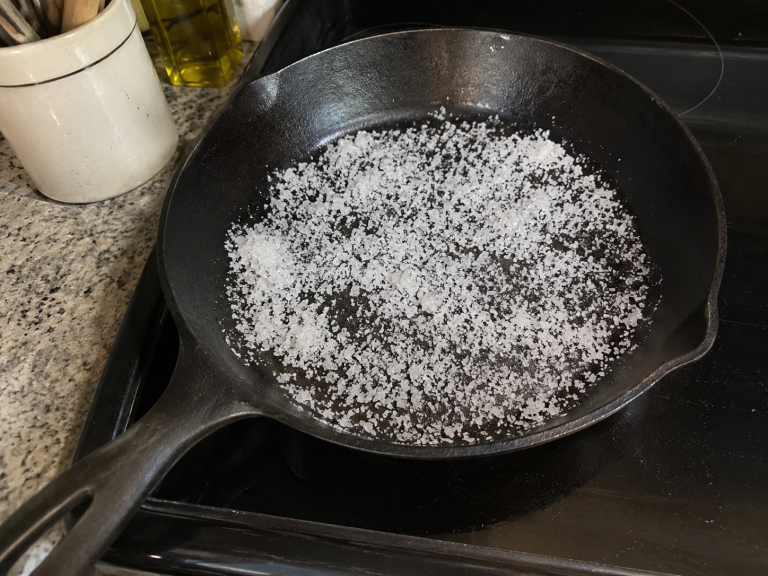
- Step 1: Pour in coarse salt. Dump 2 to 3 tablespoons of coarse kosher salt (or rock salt) into the warm, damp skillet. Avoid fine table salt, which dissolves too quickly to scrub effectively.
- Step 2: Scrub with a folded paper towel. Hold a thick, folded paper towel (or half a raw potato) and rub the salt in tight circles over the burnt areas. The salt crystals grind away stuck food without scratching the polymerized seasoning underneath.
- Step 3: Rinse and dry immediately. Rinse all the salt out with hot water, dry the skillet thoroughly with a towel, heat-dry it on the stove for two minutes, and apply a microscopic drop of oil.
Method 3: Chainmail Scrubber (Best Everyday Tool for Tough Spots)
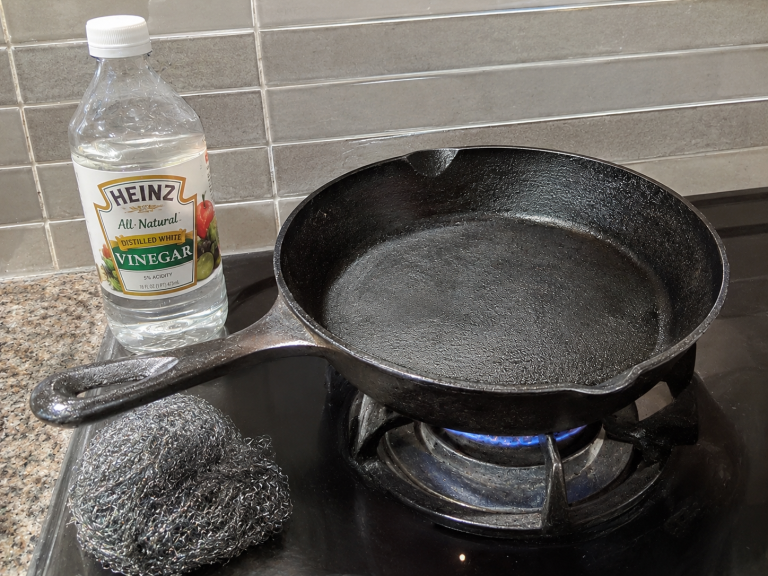
If you cook with cast iron regularly, a stainless steel chainmail scrubber is the best ten-dollar investment you can make. Made of smooth, interconnected steel rings, it has zero sharp edges—meaning it knocks off hard carbonized food without gouging your seasoning.
-
- Step 1: Hold the warm skillet under hot running water.
- Step 2: Rub the chainmail pad firmly over the burnt patches using light pressure.
- Step 3: Once the surface feels completely smooth to your fingertips, rinse, towel-dry, warm on the stove, and wipe with a drop of oil.
Method 4: Baking Soda Paste (Best for Stubborn Burnt Sugar or Acidic Sauces)
If burnt barbecue sauce or tomato paste leaves behind a stubborn dark ring, mild baking soda helps break down the charred buildup.
-
- Step 1: Mix 2 tablespoons of baking soda with 1 tablespoon of warm water to form a thick paste.
- Step 2: Spread the paste over the burnt spots in your warm skillet and let it sit for 5 minutes (do not leave it on for hours).
- Step 3: Scrub firmly with a stiff nylon dish brush or non-scratch sponge, rinse thoroughly with hot water, dry on a low stove burner, and wipe with a thin film of oil.
What Never to Use on Burnt Cast Iron
When facing a stubborn mess, avoid grabbing these common kitchen items:
-
- Heavy-Duty Steel Wool or Wire Brushes: Aggressive metal bristles strip away your dark seasoning right along with the burnt food, leaving shiny silver bare patches that will rust.
- Oven Cleaner or Harsh Degreasers: Chemical sprays are designed to dissolve baked-on oil—which is exactly what your seasoning is made of.
- Cold Water on a Hot Pan: Plunging a sizzling skillet straight from the burner into cold sink water is the number-one cause of cracked cast iron pans.
Frequently Asked Questions
Should I re-season my skillet after boiling water in it?
No. Simmering plain water for 3 to 5 minutes will not strip healthy seasoning. Simply dry the pan thoroughly on a low stove burner afterward and wipe 2 or 3 drops of cooking oil across the cooking surface before storing it away.
What if a dark spot stays behind even after the burnt food is gone?
Sometimes burnt food leaves behind a flat, smooth dark stain that looks slightly different from the rest of the pan. As long as the spot feels completely smooth when you run your fingers over it—not bumpy or crusty—leave it alone. Keep cooking normally, and it will blend seamlessly into your seasoning over the next few meals.