How to Clean a Cast Iron Skillet Without Ruining the Seasoning
Cleaning a cast iron skillet is surrounded by more kitchen myths than almost any other piece of cookware. Some people say you should never let water touch the pan, while others insist on scrubbing it only with raw potatoes and coarse salt. With so much conflicting advice, it is easy to feel nervous every time you finish cooking dinner.
The truth is much simpler. Cast iron is nearly indestructible, and daily cleanup takes less than two minutes once you know the right routine. You do not need special soaps, expensive sprays, or complicated rituals—just warm water, a good brush, and a dry towel.
The Golden Rule: Clean While the Pan Is Still Warm
The biggest secret to effortless cast iron cleanup is timing. Never leave your skillet sitting on the stove overnight or soaking in a sink full of dirty dishes.
Once you serve your food, let the pan cool down for 5 to 10 minutes until it is warm to the touch but no longer scorching hot. Warm grease and food bits wipe away effortlessly, whereas cold, hardened fat requires heavy scrubbing that wears down your seasoning.
What You Need for Daily Cleanup
Keep these four basic items near your sink:
-
- Hot tap water
- A stiff nylon dish brush, natural bristle brush, or chainmail scrubber
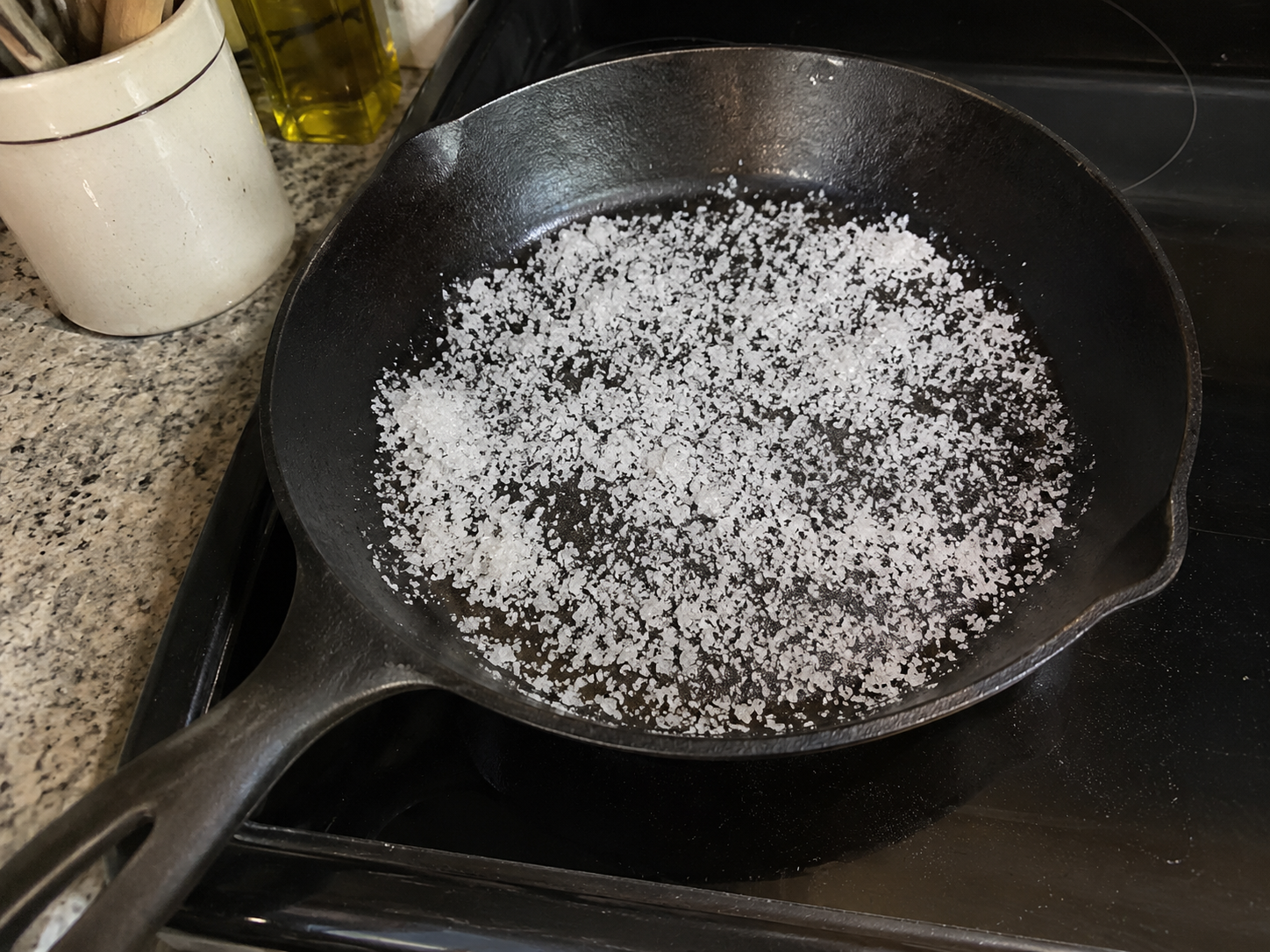
- Coarse kosher salt (for stubborn stuck-on bits)
- A clean kitchen towel or sturdy paper towels
- A bottle of canola or vegetable oil
Step-by-Step Daily Cleaning Routine
Step 1: Scrape Away Excess Food and Grease
Before turning on the tap, use a flat metal spatula or plastic pan scraper to push leftover food crumbs into the trash. If there is a lot of leftover cooking oil or bacon fat, pour it into a heat-safe jar or paper cup—never down your kitchen drain.
Step 2: Wash With Hot Water and a Brush
Hold the warm skillet under hot running water and scrub the cooking surface with a stiff nylon brush or sponge. Because the pan is still warm, most food residue will slide right off within seconds.
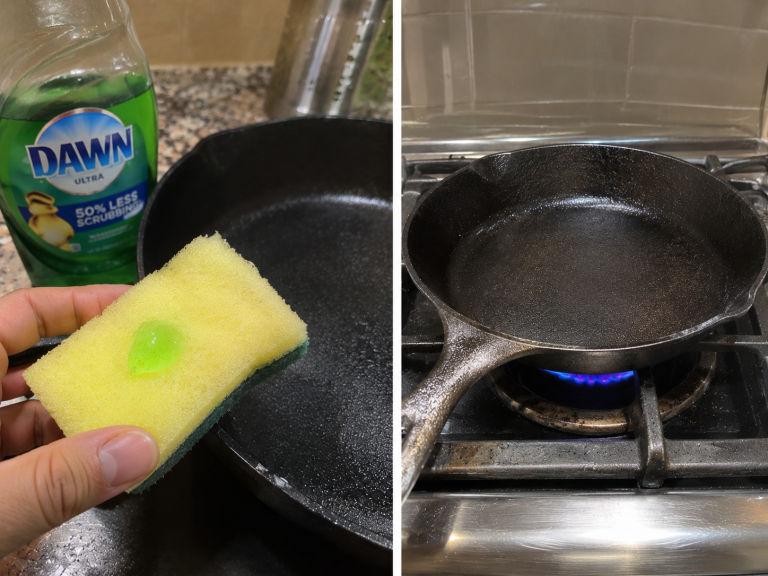
Note on Dish Soap: Using a tiny drop of modern, mild dish soap will not strip your seasoning. True seasoning is baked-on polymerized oil, not loose grease. However, if hot water and a brush remove all the food on their own, you do not even need soap.
Step 3: Tackle Stubborn Bits With Coarse Salt (If Needed)
If cheese, sauces, or seared meat left behind stuck-on spots, dump 1 to 2 tablespoons of coarse kosher salt into the damp skillet. Scrub the salt around the pan using a folded paper towel or dish brush. The salt acts as a gentle abrasive that lifts burnt food without scratching the seasoning underneath, then dissolves cleanly when you rinse with hot water.
Step 4: Dry the Skillet Immediately
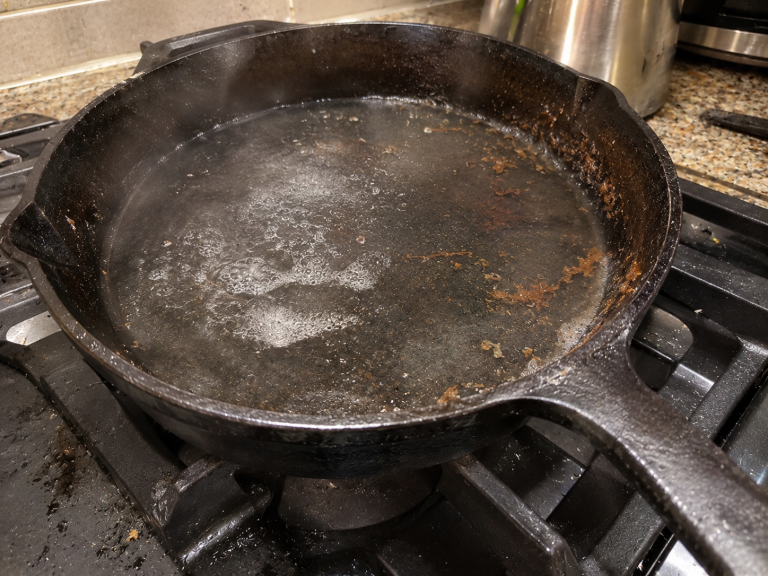
Never leave a cast iron skillet in a dish drying rack to air dry. Even a few drops of standing water can trigger orange surface rust within fifteen minutes.
Wipe the inside, outside, and handle thoroughly with a clean kitchen towel. Then, place the skillet back on your stove over low heat for 2 to 3 minutes. This step evaporates any hidden moisture trapped inside the microscopic pores of the iron.
Step 5: Wipe With a Microscopic Layer of Oil
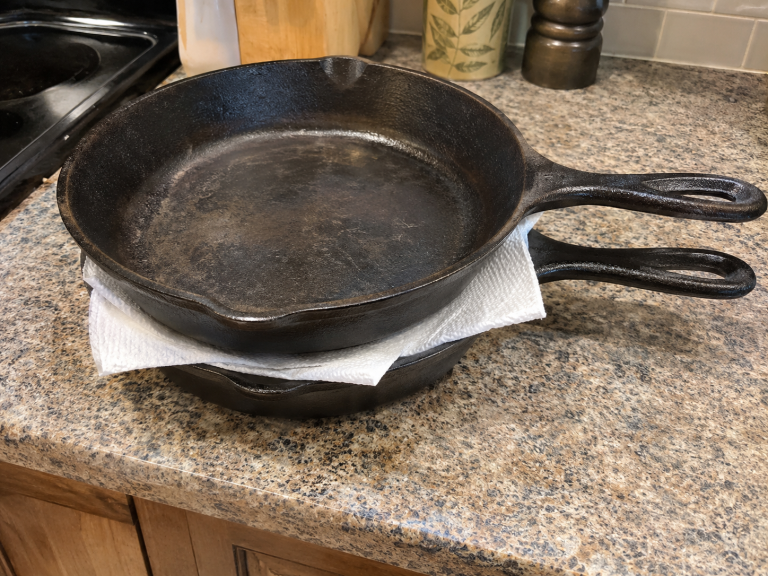
While the pan is still warm on the stove, turn off the burner and add 2 or 3 drops of cooking oil (canola, vegetable, or grapeseed oil) to the center. Use a folded paper towel to wipe that tiny drop of oil across the entire inside cooking surface.
Take a dry corner of the paper towel and buff off any excess shine so the pan feels dry, not greasy. Once it cools, your skillet is protected from humidity and ready for your next meal.
4 Cleaning Mistakes That Ruin Cast Iron
Avoid these common habits to keep your skillet looking black, smooth, and rust-free:
-
- Never Put Cast Iron in the Dishwasher: Harsh dishwasher detergents and high-pressure steam will completely strip your seasoning and turn the entire skillet bright orange with rust in a single cycle.
- Never Soak Your Skillet in the Sink: Letting a pan sit underwater weakens the bond between the seasoning and the iron, causing flaking and pitting.
- Never Pour Cold Water Into a Screaming-Hot Pan: Thermal shock happens when freezing water hits blazing-hot metal. This sudden temperature drop can warp the bottom of your pan or even crack the iron in half. Always let the pan cool for a few minutes first.
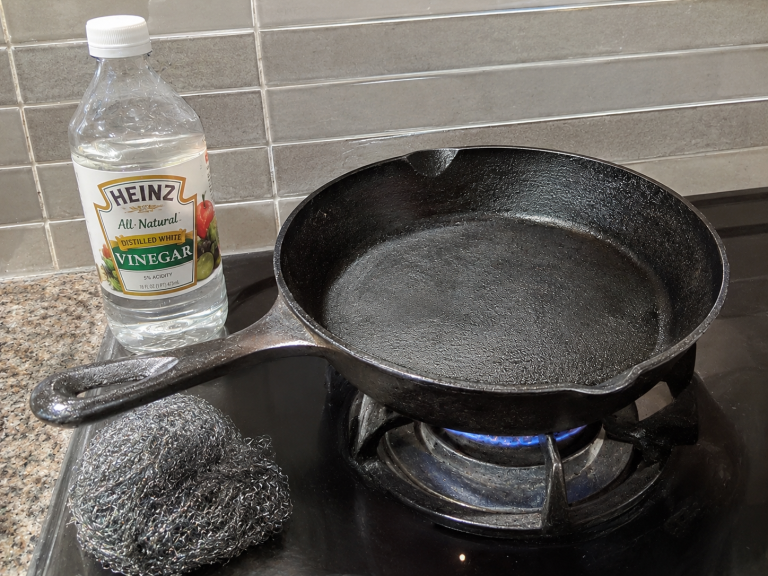
- Avoid Harsh Steel Wool for Daily Washing: Fine steel wool pads (like SOS pads) act like sandpaper and will scrub away your hard-earned seasoning. Save steel wool only for restoring rusty vintage pans.
Frequently Asked Questions
What if my paper towel turns black when I wipe the clean pan?
Seeing faint dark gray or black residue on your towel after oiling a freshly cleaned skillet is completely normal. It is simply trace amounts of carbonized oil from cooking, not toxic metal or peeling paint. Keep cooking and wiping—over time, the surface will wipe cleaner.
How do I clean the outside bottom of my cast iron skillet?
Wipe the bottom and sides with hot water and a soapy sponge whenever grease splatters down the outside. Just remember to dry the bottom thoroughly with a towel and rub a tiny drop of oil across it once a month so stove burners do not cause rust.