Can You Use Dish Soap on Cast Iron Skillets? (The Real Truth)
Ask ten different home cooks whether you can wash a cast iron skillet with dish soap, and you will likely spark a heated kitchen debate. For generations, grandparents warned that letting even a single drop of soap touch cast iron would instantly ruin the pan, strip away the non-stick coating, and make future meals taste like detergent.
While that rule used to be true a hundred years ago, modern kitchen science tells a completely different story. Yes, you can safely use a small amount of mild dish soap on your cast iron skillet without ruining the seasoning. Understanding why this myth started—and how modern soap actually interacts with baked-on oil—will make your daily cleanup much faster and more hygienic.
Where Did the “No Soap on Cast Iron” Myth Come From?
Our great-grandparents were not wrong when they banned soap from their cast iron pans. In the late 1800s and early 1900s, homemade and commercial soaps were made with lye (sodium hydroxide) and vinegar.
Lye is an aggressive, caustic chemical—it is actually the main active ingredient used in heavy-duty oven cleaners today to strip old pans down to bare silver metal. Washing a skillet with old-fashioned lye soap literally ate away the protective seasoning layer in seconds.
Today, standard kitchen dish liquids (like Dawn, Palmolive, or Seventh Generation) are mild detergents, not lye soaps. They contain zero lye and are formulated to lift loose grease and food particles without dissolving chemically bonded polymers.
Why Modern Dish Soap Does Not Strip Seasoning
To understand why modern dish liquid is safe, you have to remember what cast iron seasoning actually is. Seasoning is not a thin layer of wet grease sitting on top of the metal.
When you heat cooking oil past its smoke point, it goes through a chemical reaction called polymerization. The oil molecules link together and bake directly into the microscopic pores of the iron, forming a hard, solid, plastic-like coating.
-
- Wet grease and leftover bacon fat wash away easily with dish soap.
- Polymerized seasoning is chemically bonded to the metal and cannot be dissolved by gentle dishwashing liquid or a nylon sponge.
If a quick wash with mild dish soap ever strips dark flakes off your skillet, that layer was never true seasoning—it was just burnt-on carbonized food residue that needed to come off anyway.
When Should You Use Dish Soap on Cast Iron?
You do not need to scrub your skillet with soap after every single meal. In fact, hot tap water and a stiff brush handle 90% of daily cleanups on their own. However, reaching for a drop of dish soap is smart in several everyday situations:
-
- After Cooking Strongly Flavored Foods: If you just pan-seared garlic salmon, spicy curry, or pungent onions, rinsing with plain water can leave lingering odors that transfer to tomorrow morning’s pancakes. A drop of soap removes fish and spice oils completely.
- When Grease Feels Sticky or Gummy: If leftover cooking fat starts building up into a sticky film, mild detergent cuts through the excess oil before it turns rancid.
- When Restoring a Dusty Thrift-Store Pan: Any secondhand skillet or brand-new pan fresh out of a warehouse box should be washed thoroughly with warm soapy water before its first oven seasoning.
- When Cleaning Up Raw Meat Juices: If raw chicken or pork touched the handle or outside rim of the skillet, washing with warm soapy water gives you complete peace of mind.
How to Safely Wash Cast Iron With Dish Soap (4 Simple Steps)
Using dish soap safely comes down to keeping the wash quick and drying the metal thoroughly afterward.
Step 1: Let the Skillet Cool Until Warm
Wait 5 to 10 minutes after cooking so the pan is warm, not smoking hot. Running cold or lukewarm soapy water over blazing-hot iron causes thermal shock, which can warp or crack the skillet.
Step 2: Use Just One or Two Drops of Mild Liquid Soap
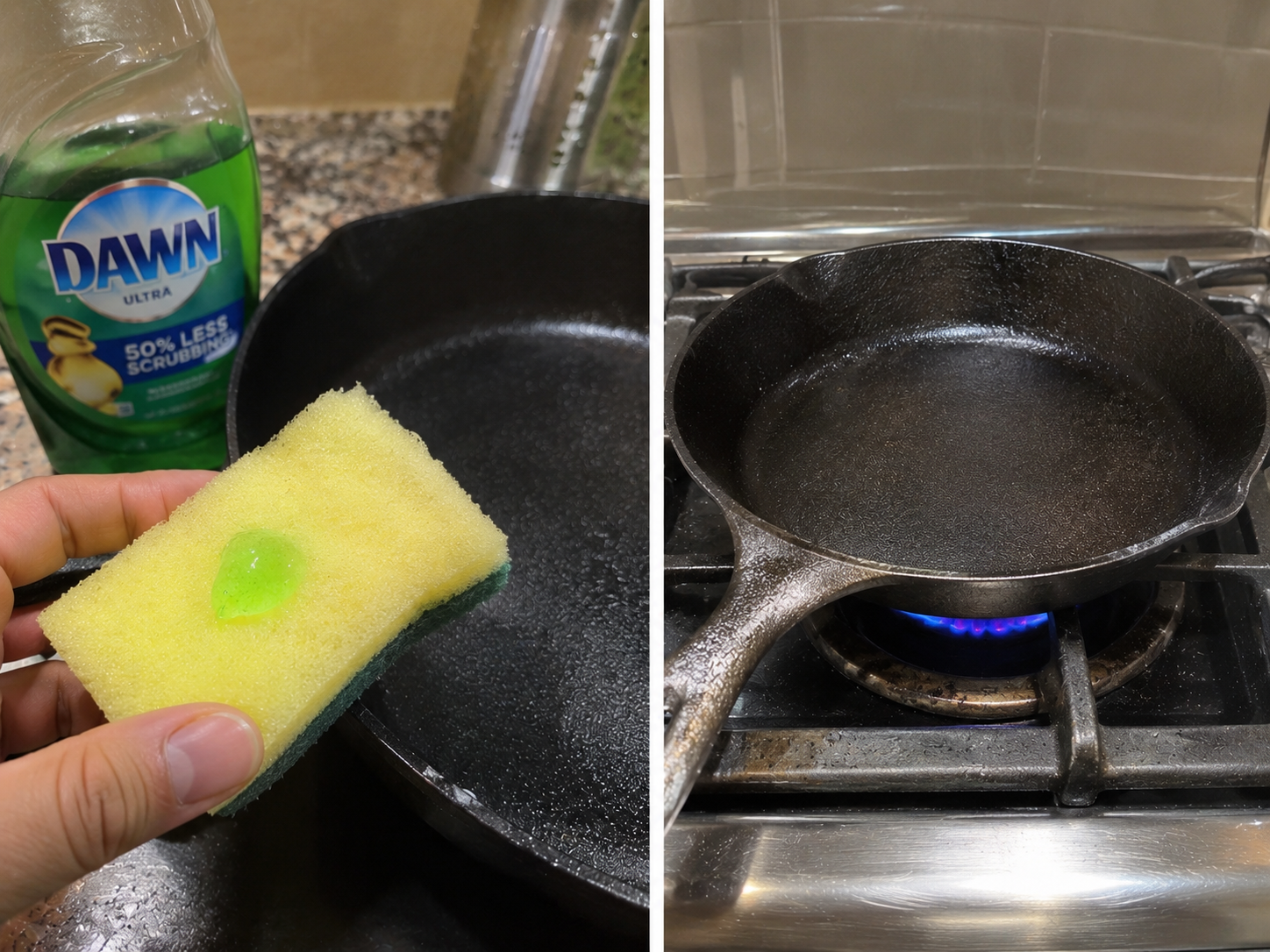
Squeeze 1 or 2 drops of standard dish liquid onto a soft sponge or stiff nylon dish brush. Avoid using the rough green abrasive side of heavy-duty scouring pads, as physical scratching wears down seasoning much faster than soap ever could.
Step 3: Scrub Quickly and Rinse Completely
Wash the inside, sidewalls, and handle under warm running water for 15 to 20 seconds, then rinse thoroughly so zero soap suds remain on the metal. Never leave the skillet sitting in a sink full of soapy dishwater to soak.
Step 4: Heat-Dry and Apply a Micro-Layer of Oil
Soap strips away all loose surface oils, leaving your seasoning clean but temporarily dry. Immediately wipe the pan with a kitchen towel, place it over low heat on your stove for 2 minutes to evaporate hidden moisture, turn off the burner, and rub 2 drops of cooking oil across the cooking surface with a paper towel.
3 Cleaning Products You Must Still Avoid
While everyday liquid dish soap is completely safe, keep these harsher cleaners far away from your cast iron:
-
- Dishwasher Pods and Detergents: Automatic dishwashers blast cookware with high-alkaline detergents and scalding steam for over an hour, which destroys seasoning and rusts the entire pan.
- Heavy Degreasers and Oven Cleaners: Products containing lye or strong industrial solvents are made specifically to strip baked-on oil off metal.
- Bleach or Harsh Abrasive Powders: Cleaners like Comet or chlorine bleach can pit raw iron and damage the protective coating.
Frequently Asked Questions
Will using dish soap make my cast iron skillet rust?
Soap itself does not cause rust—water causes rust. As long as you dry your skillet immediately with a towel, warm it on a low stove burner for two minutes, and wipe a tiny drop of oil over the surface after washing, your pan will stay 100% rust-free.
How often is it safe to wash cast iron with dish soap?
You can safely use a drop of mild dish soap every time you cook if you prefer, provided you always heat-dry the pan on the stove and wipe it with a microscopic film of oil afterward. Most cooks simply use hot water and a brush for light meals, saving dish soap for greasy or strong-smelling dishes.