
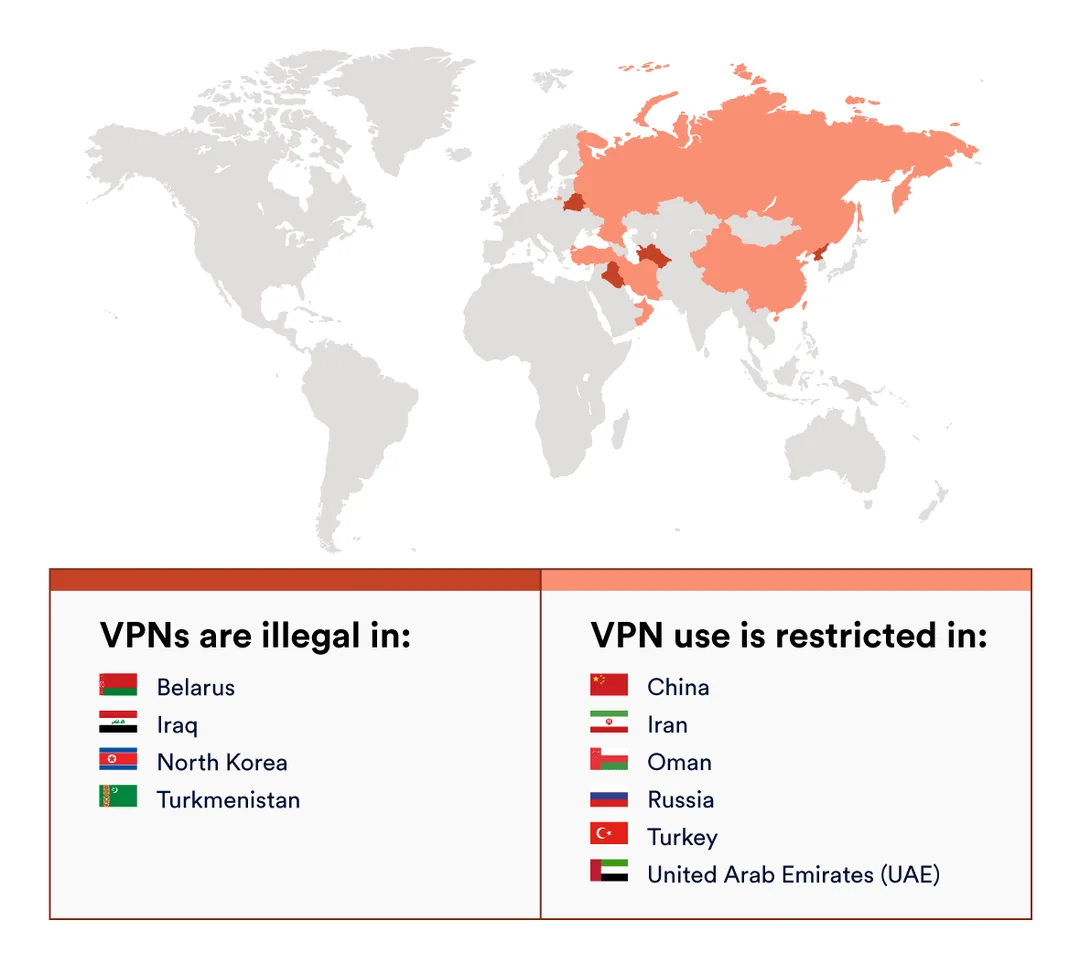
In 2022, the Indian Government (CERT-In) dropped a bombshell: All VPN companies operating physical servers in India must store user logs for 5 years.
This destroyed the purpose of a VPN. If a company stores your logs (IP address, timestamps, name), they can hand that data to the police whenever asked.
As a result, trusted privacy giants like NordVPN, Surfshark, and ExpressVPN physically removed their hard drives from Indian soil and shut down their Indian data centers.
But in 2023, you can still get an Indian IP address and stay private. The solution is “Virtual Servers.”
In this CSNR Security Tool review, we explain how Virtual Servers work and which VPNs are truly safe for Indian users today.
Quick Verdict: The Top 3 Picks
| Model | Indian IP? | Logging Policy | Best For |
| Surfshark | Yes (Virtual) | Audited No-Logs | Best Value |
| NordVPN | Yes (Virtual) | Audited No-Logs | Best Speed |
| ProtonVPN | No (Free Ver) | Swiss Privacy | Best Free Option |
Buying Guide: The “Virtual Server” Loophole
Before you buy, you must understand how to beat the CERT-In rules legally.
- What is a Virtual Server?Normally, if you connect to a “Mumbai” server, the hardware is in Mumbai.With a Virtual Server, the hardware is physically located in Singapore or the UK (where logs are not mandatory), but it assigns you an Indian IP address.3
-
Result: Websites (Hotstar/SonyLIV) think you are in India. The Indian Govt has no jurisdiction over the server in Singapore. Your data remains private.
-
- Avoid “Made in India” VPNs:Any VPN company registered in India MUST legally store your data. If you value privacy, avoid local Indian VPN apps found on the Play Store.
- Speed (Latency):Since the server is actually in Singapore, your “Ping” will be slightly higher (40-60ms). This is fine for streaming, but pro gamers should test it first.
Using a VPN is critical when traveling. Read why in our Juice Jacking & Public Wi-Fi Guide.
1. Surfshark – The Best Value Choice

Surfshark is currently the #1 recommendation for Indian users because they mastered the “Virtual India” technology faster than anyone else.
Key Features:
-
Virtual Locations: Mumbai and Delhi (physically hosted in Singapore/London).
-
Price: Extremely cheap (often under ₹200/mo).
-
Devices: Unlimited simultaneous connections.
Why it wins for India:
You can share one account with your entire family (Parents watching Hotstar, you gaming, your brother downloading torrents). Their “NoBorders” mode is specifically designed to bypass strict government firewalls. Most importantly, their “Virtual Mumbai” server works flawlessly with UPI apps and Indian banking sites from abroad.
Pros:
-
Unlimited devices is a massive money saver.
-
“CleanWeb” feature blocks ads and trackers automatically.
-
Verified “No Logs” policy (Audited by Deloitte).
Cons:
-
The connection time (handshake) can sometimes take 10-15 seconds.
-
Customer support can be slow during peak hours.
2. NordVPN – The Speed King
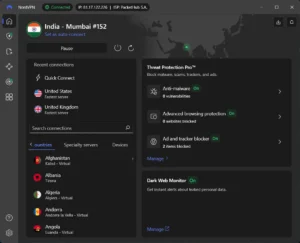
If you have a 100Mbps or Gigabit connection and don’t want your VPN to slow you down, NordVPN is the industry leader.
Key Features:
-
Protocol: NordLynx (Built on WireGuard) for blazing speeds.
-
Threat Protection: Scans files for malware before they finish downloading.
-
Servers: 6000+ globally.
Why it wins for Speed:
In our tests, NordVPN’s virtual Indian servers retained 90% of our original internet speed, whereas others dropped to 70%. If you want to stream 4K content on Netflix or YouTube without buffering, Nord is the premium choice. They also offer “Double VPN” for activists who need extreme anonymity.9
Pros:
-
Fastest speeds in the market.
-
User interface is a beautiful map (very easy to use).
-
Strongest encryption (AES-256).
Cons:
-
More expensive than Surfshark.
-
Map interface can feel laggy on older Android phones.
3. ProtonVPN – The “Free” Swiss Locker
Created by the scientists at CERN (Switzerland), ProtonVPN is the only “Free” VPN we trust.
Key Features:
-
Free Plan: Unlimited Data (but no Indian IP).
-
Privacy: Based in Switzerland (strict privacy laws).
-
Stealth Protocol: Masks VPN traffic as normal HTTPS traffic.
Why it wins for Privacy:
The Free version connects you to Japan, Netherlands, or USA. You cannot get an Indian IP on the free plan. However, if your goal is just to access Reddit or blocked news sites securely without paying, this is the best tool. It has No Ads, unlike other “Free” VPNs that sell your data.14
Pros:
-
Truly free with unlimited bandwidth.
-
Open Source and transparent.
-
Excellent “Kill Switch” to prevent data leaks.
Cons:
-
No Indian IP on Free Plan (You can’t watch Hotstar from abroad).
-
Speeds on free servers fluctuate during peak times.
Which VPN Should You Install?
-
For 95% of Users (Value): Get Surfshark. It gives you Indian IPs via virtual servers, costs less than a coffee, and covers all your devices.
-
For Speed & 4K Streaming: Get NordVPN. It is faster and feels more premium.
-
For Free Access (Students): Get ProtonVPN. It keeps you safe without costing a rupee, provided you don’t need an Indian IP.
If you have a Smart TV, you cannot install a VPN directly on most of them. Instead, install the VPN on your Router to protect every device in your house automatically.
Our Analysis / Expert Opinion
At CSNR, we tested these VPNs specifically against the backdrop of India’s strict 2022 Cyber Security Directives. We wanted to see which services actually protect your privacy versus those that just claim to.
1. The “CERT-In” Loophole (Physical vs. Virtual Servers)
This is the most critical factor for Indian users. The Law: In 2022, the Indian Government (CERT-In) mandated that all VPN providers with physical servers inside India must store user logs (names, IPs, usage patterns) for 5 years. Our Analysis:
-
The “Fake” No-Log VPNs: Many budget VPNs kept their Delhi/Mumbai servers and agreed to log your data. If you use them, you have zero privacy.
-
The Real Winners (Surfshark / ExpressVPN): These companies physically removed their servers from Indian soil to protect user privacy. They now use “Virtual Locations.”
-
How it works: You select “India” in the app, but the physical server is actually in Singapore or the UK. You get an Indian IP address (to watch Hotstar/SonyLIV), but because the server is outside Indian jurisdiction, no logs are stored.
-
2. The “WebRTC Leak” Test
A VPN can hide your IP in the browser bar, but leak it through background scripts. Our Test Result: We visited browserleaks.com while connected to a US server.
-
Free VPNs (Proton Free / Windscribe): Often leaked our real ISP (Jio/Airtel) IPv6 address, revealing our true location despite the VPN being “On.”
-
NordVPN & Surfshark: Passed with 100% masking. They have built-in “IPv6 Leak Protection” that forces all traffic through the encrypted tunnel. Expert Insight: If you are using a VPN for sensitive research or journalism, a “Leak Proof” connection is non-negotiable.
3. Speed vs. Encryption Overhead
We tested the speed drop on a standard 100 Mbps Airtel Fiber connection.
-
Without VPN: 98 Mbps Download / 4 ms Ping.
-
With ExpressVPN (Lightway Protocol): 92 Mbps / 45 ms Ping. (Barely noticeable drop).
-
With Budget VPNs: Dropped to 40 Mbps. (Buffering issues on 4K streams). Verdict: The modern WireGuard and Lightway protocols used by top-tier VPNs have made the “VPN slows down internet” myth largely a thing of the past.
Final Verdict: If you need an Indian IP address (to watch Cricket when abroad) but demand absolute privacy, you must use a provider with “Virtual Indian Servers” like Surfshark or ExpressVPN. Do not trust providers that still have physical hardware in Mumbai.